

As winter approaches and daylight hours diminish, many houseplants struggle with the reduced sunlight. The good news? Numerous beautiful, resilient plants can thrive even in winter’s low light conditions. Whether you’re looking to brighten a dim corner or maintain your indoor garden through the darker months, these low-light champions will keep your space lush and vibrant all season long.
Disclosure & Information Note:
This post may contain affiliate links, which means I may earn a small commission if you choose to make a purchase at no additional cost to you. I only recommend products and resources I genuinely believe add value. Portions of this content were created with the assistance of AI tools and then carefully reviewed, edited, and fact-checked by me for accuracy and authenticity. All information is provided for general informational purposes only and is not intended as medical, financial, legal, or professional advice. Always consult a qualified professional before making decisions related to your health, finances, safety, or lifestyle.
Why Low-Light Plants Are Perfect for Winter
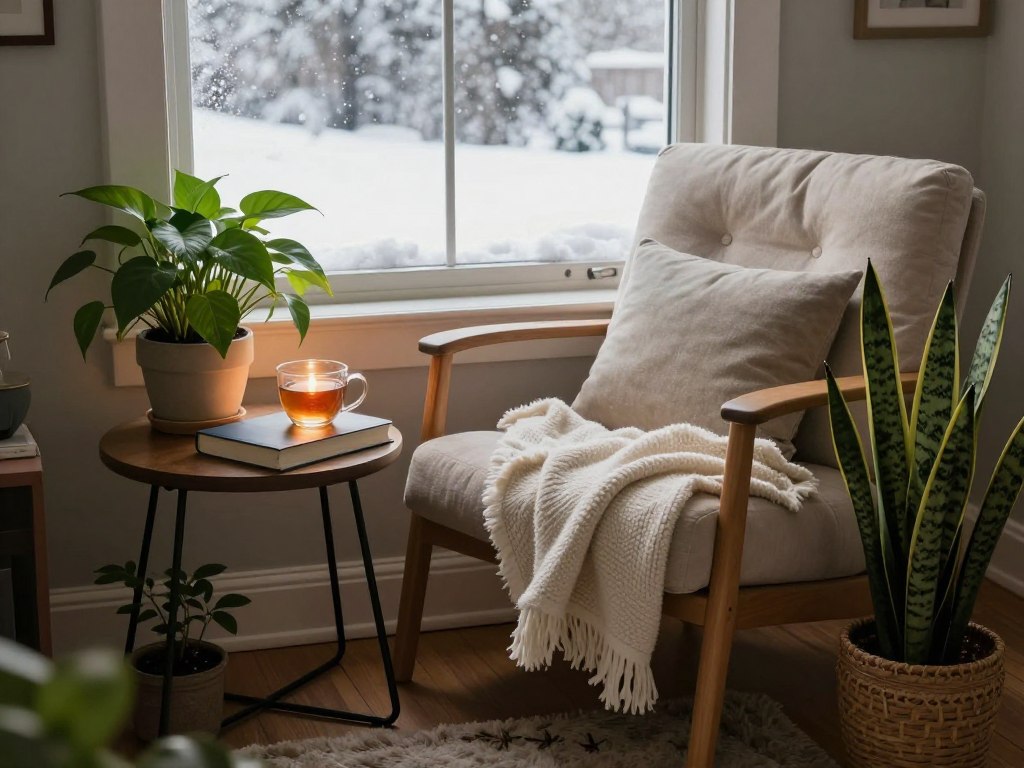
Winter presents unique challenges for indoor gardeners. Shorter days mean less natural sunlight, while cold drafts and dry indoor heating create stressful conditions for many plants. Low-light houseplants are specially adapted to thrive in these conditions, making them ideal winter companions.
During winter months, even south-facing windows receive less intense light. Plants that normally flourish might struggle, showing signs of stress like yellowing leaves, stunted growth, or leaf drop. Low-light specialists, however, have evolved to photosynthesize efficiently in dim conditions, often originating from forest understories where direct sunlight is scarce.
Beyond their resilience, these plants offer significant benefits during winter:
- They purify indoor air, which tends to become stagnant when windows stay closed
- They add much-needed humidity to dry, heated indoor environments
- They provide a psychological boost during darker months when seasonal mood changes are common
- Many require less frequent watering, matching winter’s naturally slower growth cycle
Essential Winter Care Tips for Low-Light Plants
Before exploring specific plant recommendations, understanding these general winter care principles will help all your low-light plants thrive:
Adjust Watering
Plants grow more slowly in winter and use less water. Allow soil to dry out more between waterings to prevent root rot. For most low-light plants, water when the top 1-2 inches of soil feels dry to the touch.
Skip the Fertilizer
Most houseplants enter a dormant or semi-dormant state in winter. Hold off on fertilizing until spring when active growth resumes, as fertilizer can stress plants during their resting period.
Clean Leaves Regularly
Dust accumulates on leaves and blocks the limited light available. Gently wipe leaves with a damp cloth monthly to maximize light absorption and keep plants looking their best.
Maintain Temperature
Keep plants away from cold drafts and heat sources. Most low-light houseplants prefer temperatures between 65-75°F (18-24°C) and will suffer if exposed to sudden temperature changes.
Increase Humidity
Winter heating systems dry indoor air significantly. Group plants together to create a microclimate with higher humidity, use a humidifier, or place plants on pebble trays with water.
Rotate Periodically
Even low-light plants grow toward light sources. Rotate pots a quarter turn weekly to encourage even growth and prevent plants from leaning or developing lopsided shapes.

The 10 Best Low-Light Houseplants for Winter
These resilient beauties will thrive even in winter’s challenging light conditions while adding life and color to your home:
1. Snake Plant (Dracaena trifasciata)
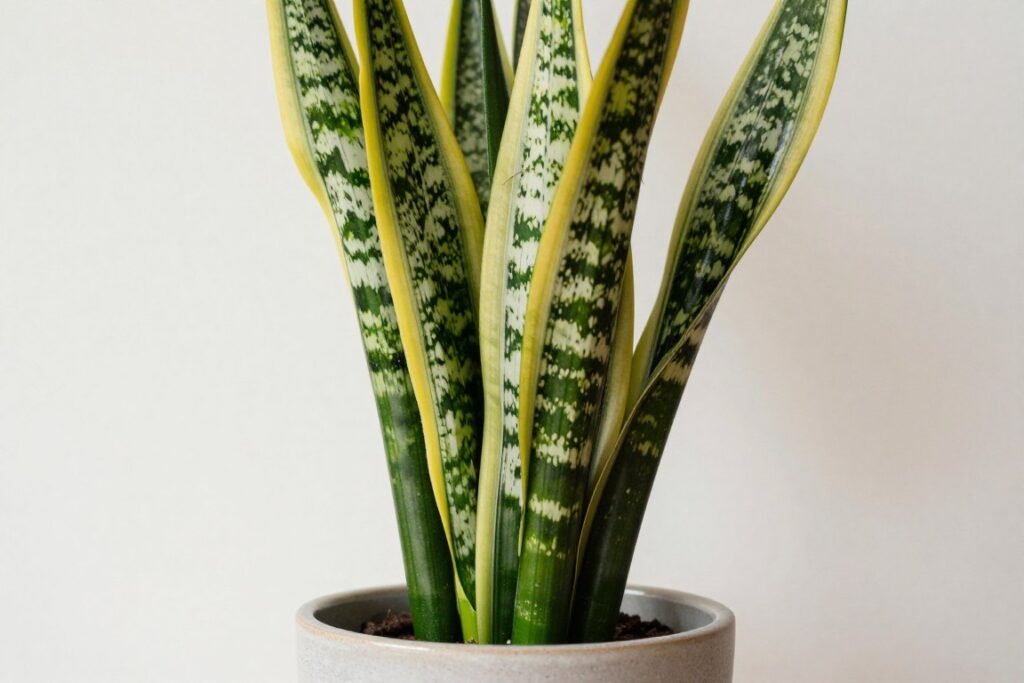
Key Characteristics: Tall, sword-like leaves with yellow or white edges grow upright from a rosette base. Their architectural form makes them perfect for corners and narrow spaces.
Light Requirements: Thrives in low light and can even survive in windowless rooms with only fluorescent lighting, though growth will be slower.
Winter Care: Water only when soil is completely dry (every 3-4 weeks in winter). Tolerates dry air well, making it perfect for heated indoor environments.
Why It’s Great for Winter: One of NASA’s top air-purifying plants, removing toxins like formaldehyde and benzene from stagnant winter air. Nearly indestructible, it forgives neglect and thrives despite winter’s challenges.
2. ZZ Plant (Zamioculcas zamiifolia)
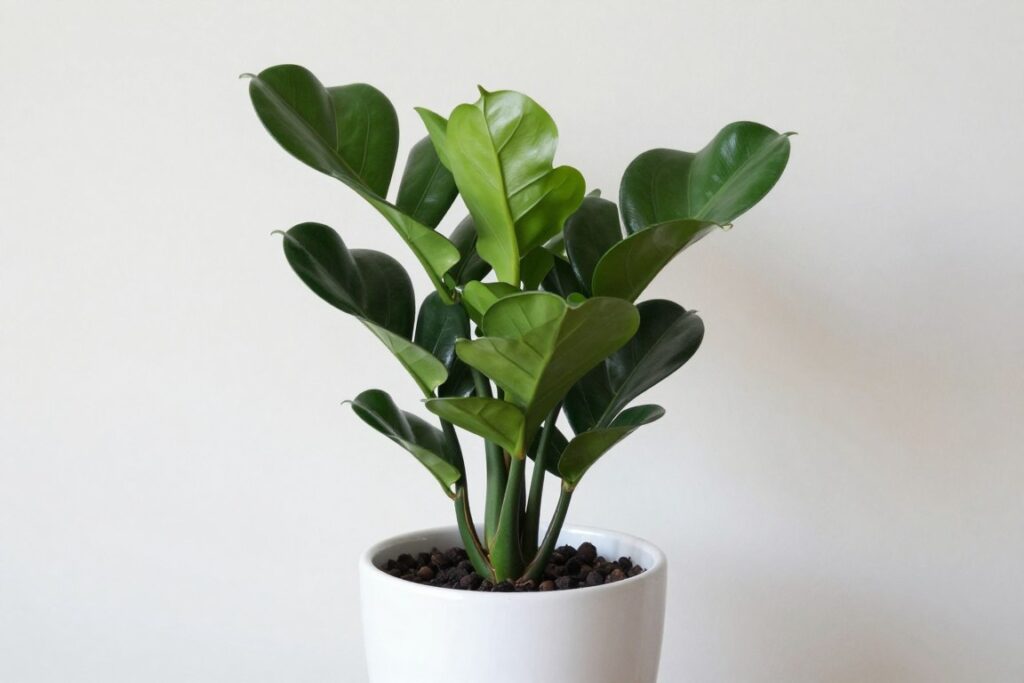
Key Characteristics: Glossy, dark green leaves grow from thick stems in a graceful arch. The waxy coating gives leaves a distinctive shine even in low light.
Light Requirements: Exceptionally tolerant of low light conditions. Can thrive several feet from a window or under office fluorescent lighting.
Winter Care: Allow soil to dry completely between waterings (typically once a month in winter). Keep away from drafts and cold windows.
Why It’s Great for Winter: Stores water in underground rhizomes, making it extremely drought-tolerant and perfect for winter when you might travel for holidays. Its glossy leaves add a vibrant touch to winter-dull rooms.
3. Pothos (Epipremnum aureum)
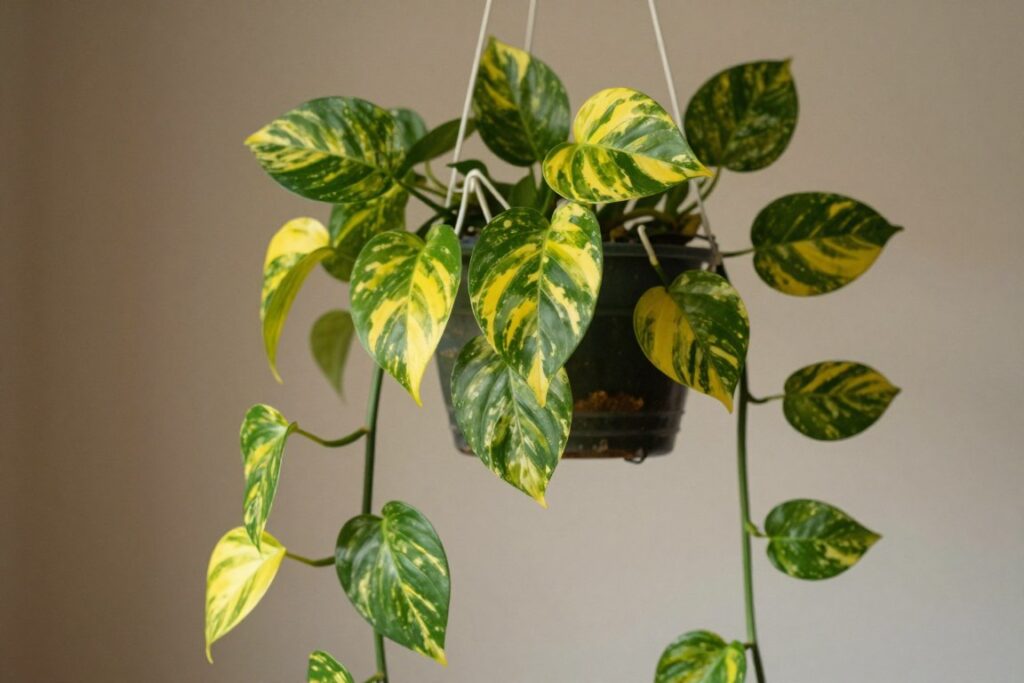
Key Characteristics: Heart-shaped leaves with various patterns depending on variety (golden, marble queen, neon, etc.). Trailing vines make it perfect for hanging baskets or shelves.
Light Requirements: Adapts to very low light, though variegation may fade to solid green in dimmer conditions.
Winter Care: Allow top 2 inches of soil to dry between waterings. Tolerates dry air but benefits from occasional misting.
Why It’s Great for Winter: Fast-growing even in winter’s low light, providing visible growth satisfaction when other plants are dormant. Excellent air purifier that removes formaldehyde from indoor air.
4. Peace Lily (Spathiphyllum)

Key Characteristics: Glossy, dark green leaves with occasional white “flowers” (actually modified leaves called spathes). Compact growth habit makes it suitable for tables and desks.
Light Requirements: Thrives in low to medium light. Can bloom even in fluorescent lighting.
Winter Care: Keep soil consistently moist but not soggy. Appreciates higher humidity, so mist regularly or place on a pebble tray.
Why It’s Great for Winter: One of the few plants that can flower in low light conditions, bringing a touch of spring to winter months. Excellent air purifier that removes common household toxins.
5. Chinese Evergreen (Aglaonema)

Key Characteristics: Lush, oval leaves with silver, red, or pink variegation depending on variety. Compact growth habit makes it ideal for coffee tables and shelves.
Light Requirements: Thrives in low light, though varieties with more color may need slightly brighter conditions to maintain vibrant patterns.
Winter Care: Allow top inch of soil to dry between waterings. Prefers warm temperatures (65-75°F) and should be kept away from cold drafts.
Why It’s Great for Winter: Brings color to winter interiors with its variegated foliage. Slow-growing nature means less maintenance during winter months.
6. Cast Iron Plant (Aspidistra elatior)

Key Characteristics: Broad, dark green, lance-shaped leaves grow directly from the soil. Slow-growing with an elegant, architectural appearance.
Light Requirements: Extremely tolerant of low light, earning its “cast iron” name for its ability to survive in challenging conditions.
Winter Care: Water sparingly in winter, allowing soil to dry between waterings. Tolerates dry air but appreciates occasional misting.
Why It’s Great for Winter: Nearly indestructible, handling temperature fluctuations, dry air, and neglect with ease. Perfect for winter travel when plant care might be inconsistent.
7. Philodendron (Philodendron hederaceum)
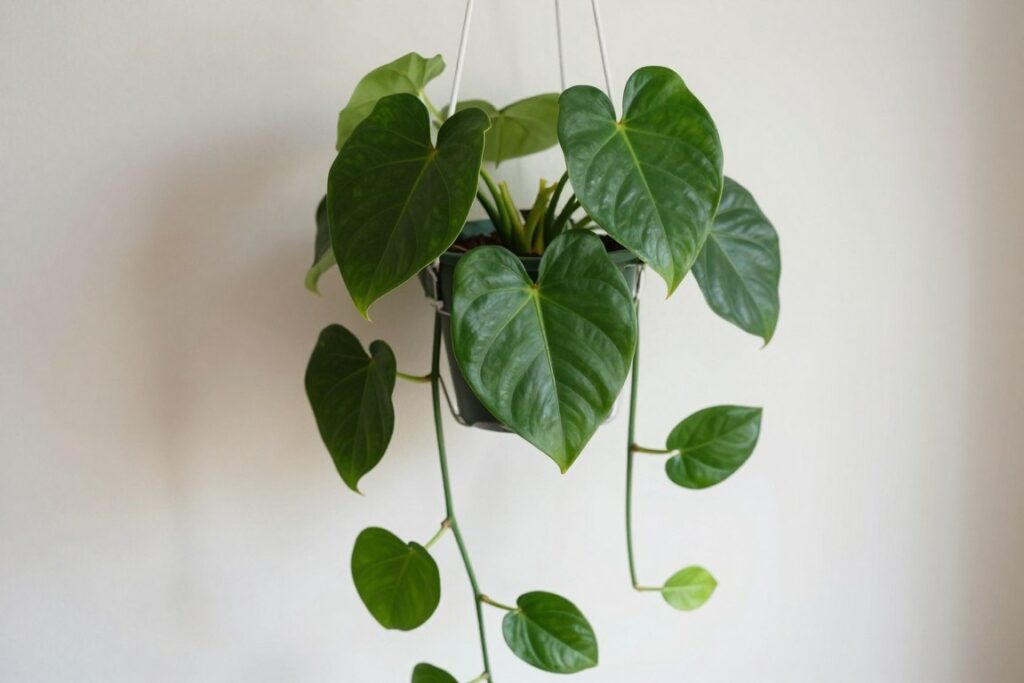
Key Characteristics: Heart-shaped, deep green leaves on trailing vines. Similar to pothos but with more uniformly shaped leaves and distinctive leaf stems.
Light Requirements: Adapts well to low light conditions, though growth may slow in very dim areas.
Winter Care: Allow top inch of soil to dry between waterings. Tolerates average home humidity but benefits from occasional misting.
Why It’s Great for Winter: Extremely forgiving of inconsistent care, bouncing back quickly if neglected. Trailing habit adds visual interest to winter-dull rooms.
8. Spider Plant (Chlorophytum comosum)

Key Characteristics: Arching, grass-like leaves, often with white stripes. Produces baby “spiderettes” on long stems that can be propagated into new plants.
Light Requirements: Adaptable to low light, though variegation may be less pronounced in dimmer conditions.
Winter Care: Allow soil to dry slightly between waterings. Keep away from cold drafts and heat sources.
Why It’s Great for Winter: One of NASA’s top air-purifying plants, removing carbon monoxide and formaldehyde. The baby plantlets provide propagation opportunities during winter when gardening options are limited.
9. Parlor Palm (Chamaedorea elegans)

Key Characteristics: Delicate, feathery fronds grow from slender stems, creating an elegant, airy appearance. Compact size makes it suitable for tables and desks.
Light Requirements: Thrives in low to medium light, making it one of the few palms that can handle darker conditions.
Winter Care: Keep soil lightly moist but never soggy. Appreciates higher humidity, so mist regularly or use a pebble tray.
Why It’s Great for Winter: Brings a touch of tropical warmth to winter interiors. Slow-growing nature means less maintenance during winter months.
10. Calathea (Goeppertia spp.)
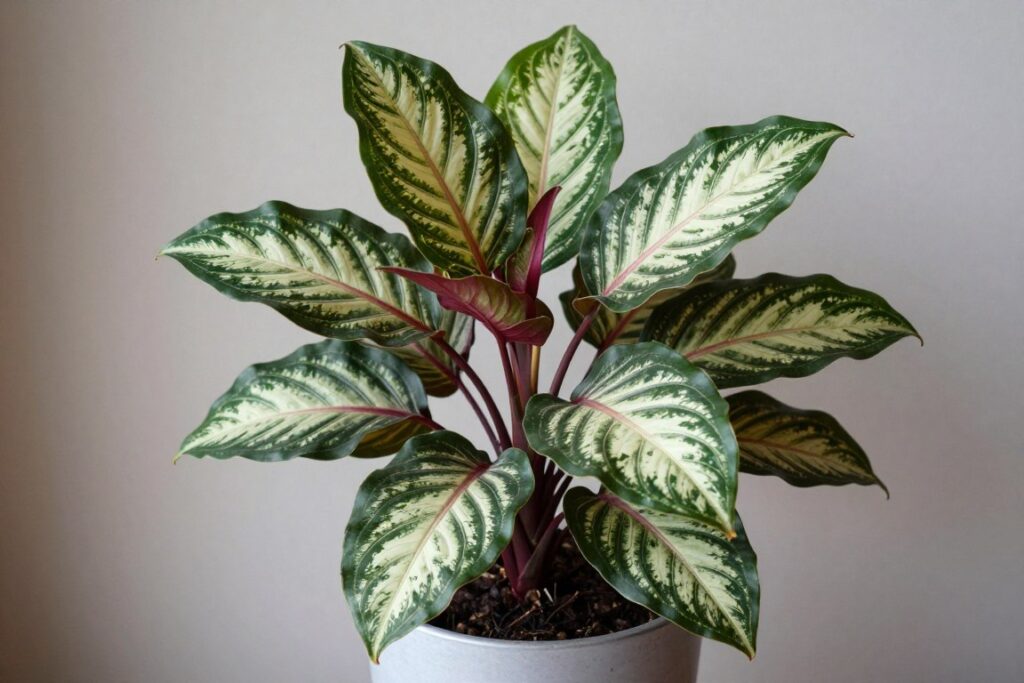
Key Characteristics: Distinctively patterned leaves in various designs depending on variety. Leaves fold up at night in a prayer-like position (earning them the nickname “prayer plants”).
Light Requirements: Prefers low to medium indirect light. Direct sun will fade their beautiful patterns.
Winter Care: Keep soil consistently moist but not soggy. Requires higher humidity than most houseplants—use a humidifier or pebble tray.
Why It’s Great for Winter: Fascinating leaf movements provide visual interest during winter months. Their striking patterns add color and texture to winter interiors.
Optimal Placement for Low-Light Plants in Winter
Understanding how to position your plants can make all the difference in their winter survival. Here’s how to find the perfect spot based on window direction:
| Window Direction | Light Intensity | Ideal Distance for Low-Light Plants | Best Plant Options |
| North-facing | Lowest intensity, consistent indirect light | 2-3 feet from window | Snake Plant, ZZ Plant, Cast Iron Plant |
| East-facing | Gentle morning sun, indirect afternoon light | 3-5 feet from window | Peace Lily, Calathea, Chinese Evergreen |
| West-facing | Strong afternoon sun, indirect morning light | 4-10 feet from window | Pothos, Philodendron, Spider Plant |
| South-facing | Strongest, most consistent direct light | 10-18 feet from window | Parlor Palm, Spider Plant, Pothos |
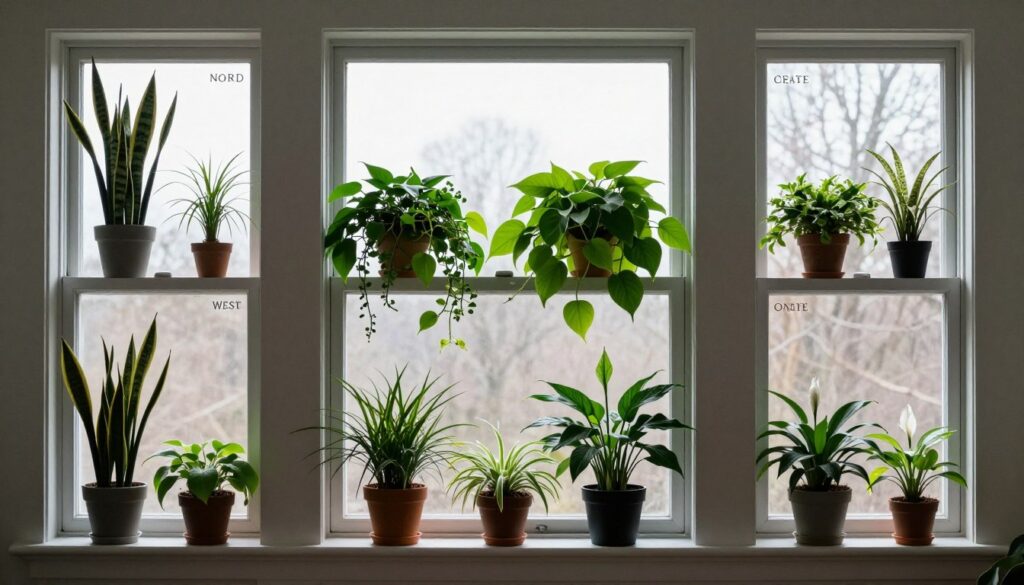
Pro Tip: If you have a room with no windows, consider the “musical plants” approach. Keep two identical low-light plants—rotate one in a brighter location while displaying the other in your windowless room, swapping them every 2-3 weeks to ensure both stay healthy.
Supplementing Natural Light in Winter
When winter daylight isn’t sufficient, these strategies can help your plants thrive:
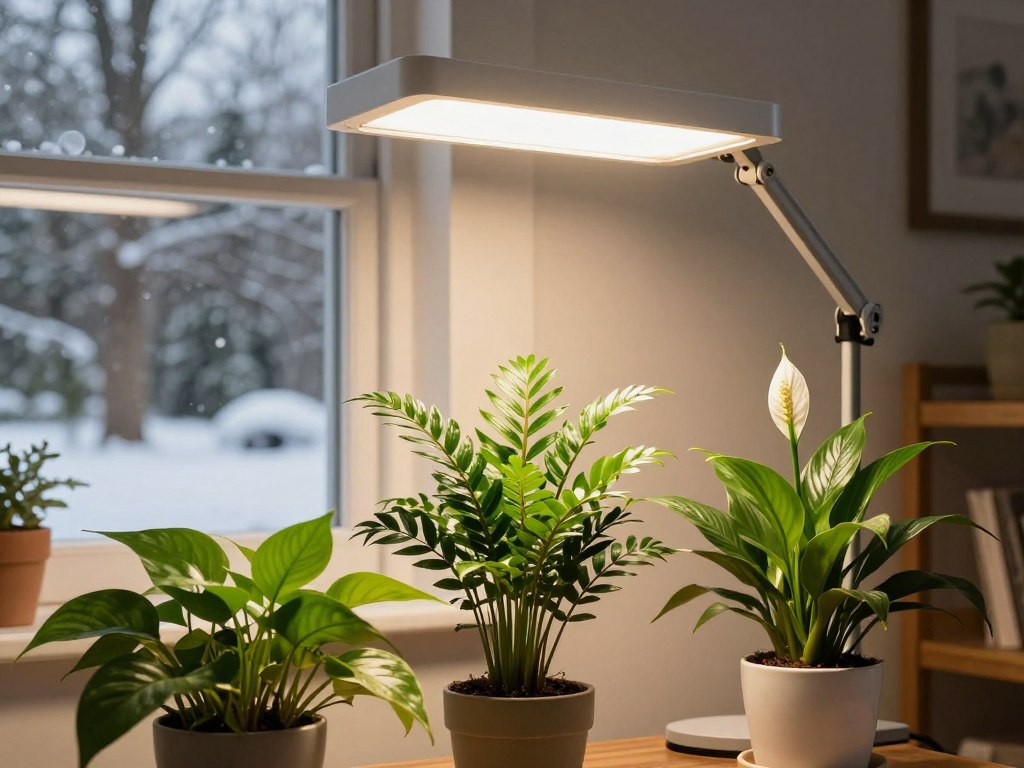
Grow Lights
Full-spectrum LED grow lights provide an excellent solution for winter’s limited daylight. Modern options are energy-efficient and can be incorporated into your decor:
- Clip-on grow lights attach directly to shelves or furniture
- Decorative floor lamps with grow bulbs blend with home decor
- Under-cabinet strip lights work well for kitchen plants
- Smart grow lights can be programmed to supplement daylight hours
For most low-light plants, 6-8 hours of supplemental lighting is sufficient during winter’s shortest days.
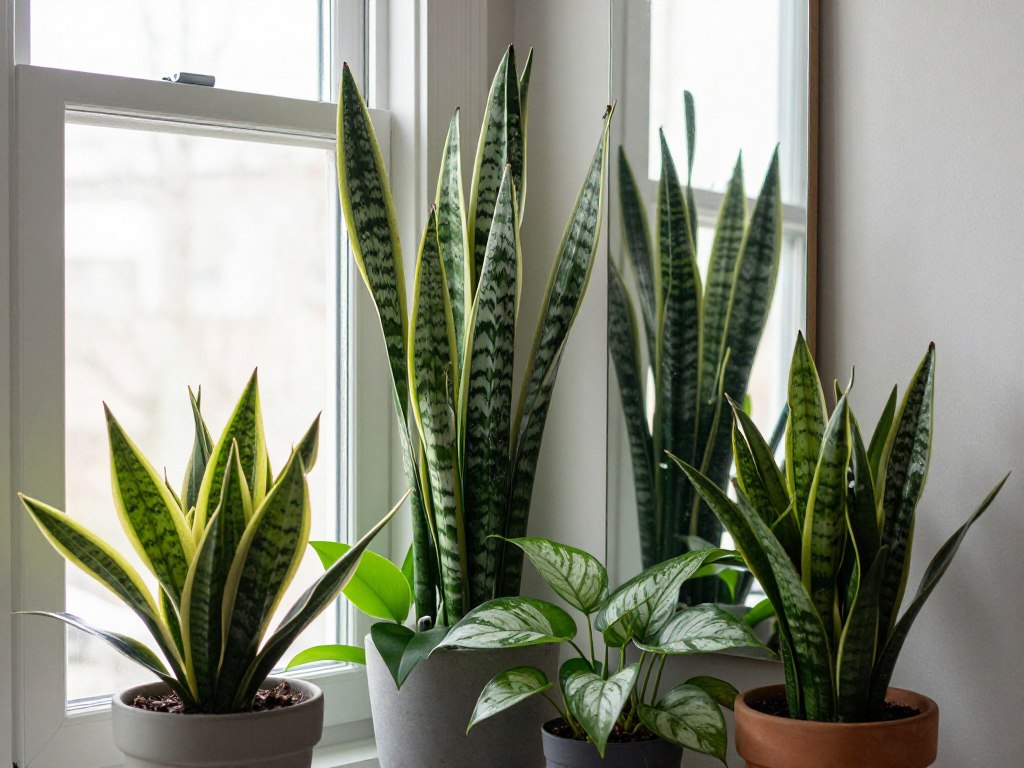
Light Reflection Techniques
Maximize the limited winter sunlight with these simple strategies:
- Place mirrors opposite windows to reflect and amplify natural light
- Use light-colored or glossy surfaces near plants to bounce light
- Keep windows clean to maximize light transmission
- Arrange plants on light-colored trays or saucers
- Consider light-colored curtains that diffuse rather than block light
Even small increases in reflected light can make a significant difference for plants during winter’s darkest days.
Embracing Winter’s Low Light with the Right Plants
Winter’s reduced daylight doesn’t mean your home has to lose its greenery. With the right selection of low-light houseplants and proper care techniques, you can maintain a thriving indoor garden even during the darkest months. These resilient plants not only survive winter’s challenging conditions but continue to purify your air, boost your mood, and bring natural beauty to your space.
Remember that even low-light plants need some light to thrive. Position them thoughtfully, supplement with grow lights when necessary, and adjust your care routine to match winter’s slower growth patterns. By understanding each plant’s specific needs, you’ll create an indoor oasis that flourishes year-round.