
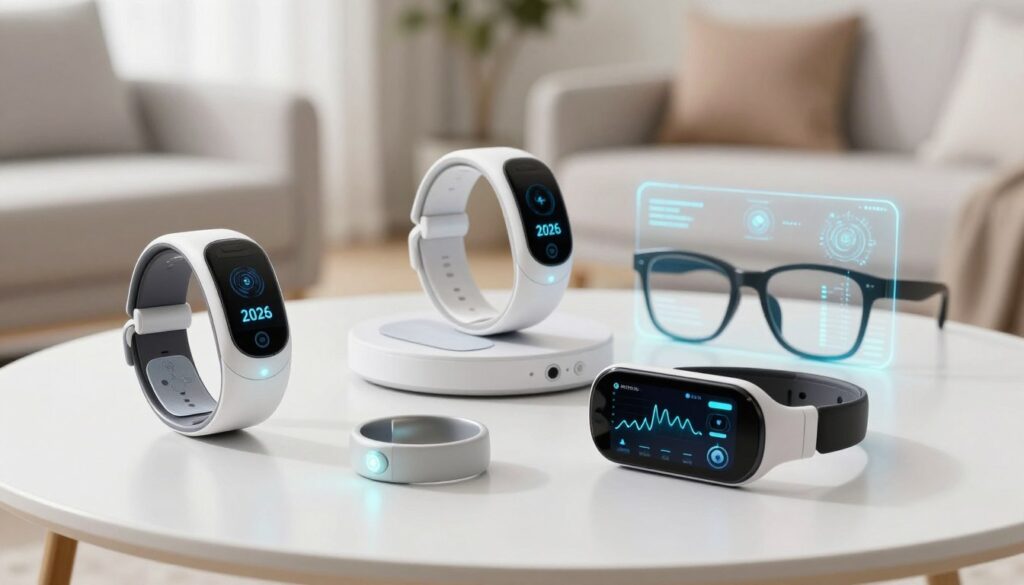
The landscape of personal healthcare has undergone a remarkable transformation by 2026. AI-powered health monitoring has evolved from simple step counters and heart rate trackers to sophisticated, predictive health ecosystems that seamlessly integrate into our daily lives. Today’s wearable technologies don’t just collect data—they interpret it, predict potential health issues before symptoms appear, and provide personalized guidance that rivals the expertise of medical professionals. As these intelligent devices become smaller, more powerful, and increasingly invisible, they’re reshaping our relationship with healthcare and empowering individuals to take unprecedented control of their wellbeing.
Next-generation AI-powered health monitoring devices in 2026 feature unprecedented integration and predictive capabilities.
Disclosure & Information Note:
This post may contain affiliate links, which means I may earn a small commission if you choose to make a purchase at no additional cost to you. I only recommend products and resources I genuinely believe add value. Portions of this content were created with the assistance of AI tools and then carefully reviewed, edited, and fact-checked by me for accuracy and authenticity. All information is provided for general informational purposes only and is not intended as medical, financial, legal, or professional advice. Always consult a qualified professional before making decisions related to your health, finances, safety, or lifestyle.
Predictive Health Analytics: From Reactive to Preventive Care
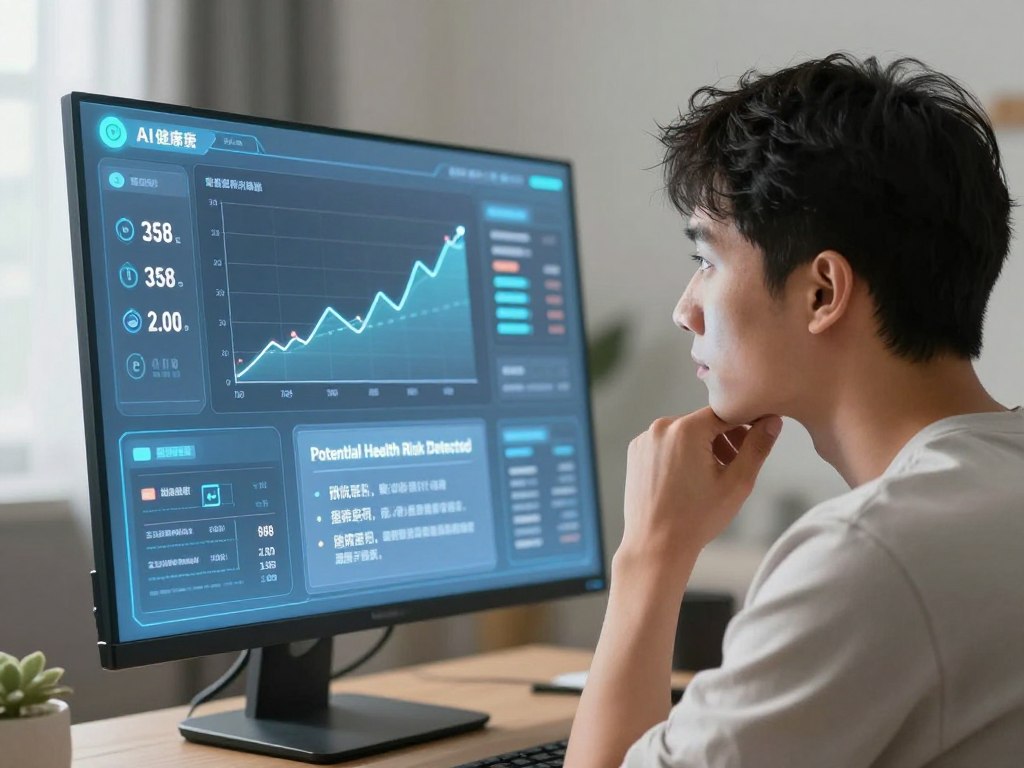
By 2026, predictive analytics has become the cornerstone of AI-powered health monitoring. Unlike earlier systems that simply reported current metrics, today’s AI algorithms analyze patterns across thousands of data points to forecast potential health issues weeks or even months before traditional symptoms might appear.
These advanced systems now integrate data from multiple sources—continuous vital sign monitoring, sleep patterns, activity levels, environmental factors, and even voice analysis—to create comprehensive health profiles unique to each user. The AI doesn’t just identify anomalies; it understands their significance within your personal health context.
Key Advancements in Predictive Health Analytics
Early Disease Detection
Modern wearables can now detect subtle physiological changes that may indicate the onset of conditions like diabetes, hypertension, or even certain cancers up to 18 months earlier than traditional diagnostic methods. This early warning system has dramatically improved treatment outcomes by enabling intervention at the earliest possible stage.
Personalized Risk Assessment
AI systems now calculate individualized risk scores for various health conditions based on your unique data profile, genetic information, and lifestyle patterns. These assessments are continuously updated as new data is collected, providing a dynamic picture of your health trajectory rather than static snapshots.
Experience Predictive Health Insights
Discover how AI-powered predictive analytics can transform your approach to personal health management and help prevent potential issues before they develop.
Personalized AI Health Coaches: Beyond Generic Advice
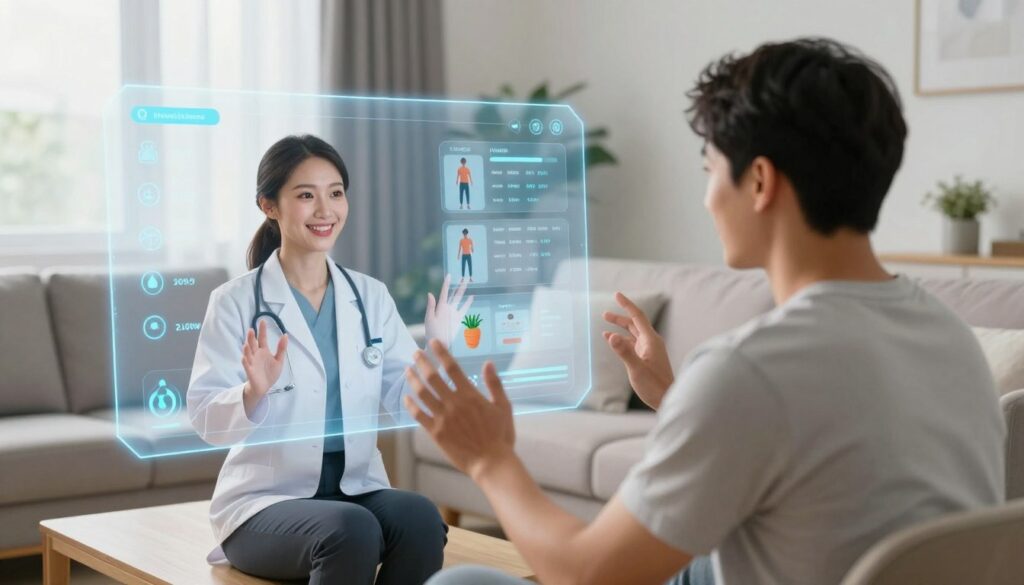
The generic health recommendations of the past have given way to highly sophisticated AI health coaches that deliver truly personalized guidance. These virtual health companions leverage large language models specifically trained on medical knowledge combined with your personal health data to provide contextually relevant advice that adapts to your changing needs.
What sets 2026’s AI health coaches apart is their ability to understand the nuances of human behavior and motivation. They recognize when you’re likely to follow through on health recommendations and when you might need additional support or a different approach. This emotional intelligence allows them to communicate in ways that resonate with your personal preferences and health goals.
How AI Health Coaches Personalize Your Experience
Adaptive Communication
AI coaches adjust their communication style based on your preferences and responses. Some users benefit from direct, data-driven guidance, while others respond better to supportive, encouraging approaches. Your AI coach learns which style motivates you most effectively.
Contextual Awareness
Modern AI health systems understand the context of your life—recognizing when you’re traveling, under stress, or recovering from illness—and adjust recommendations accordingly. This contextual awareness ensures that health guidance remains realistic and achievable.
Behavioral Psychology
AI coaches now incorporate principles of behavioral psychology to help you build sustainable health habits. They identify your unique barriers to change and develop personalized strategies to overcome them, leading to higher success rates for long-term health improvements.
“The most significant advancement in AI health coaching isn’t just the accuracy of the advice—it’s the system’s ability to deliver that advice in ways that actually change behavior. These AI coaches understand not just what you should do, but how to motivate you to do it.”
Advanced Non-Invasive Biometrics: Beyond the Basics

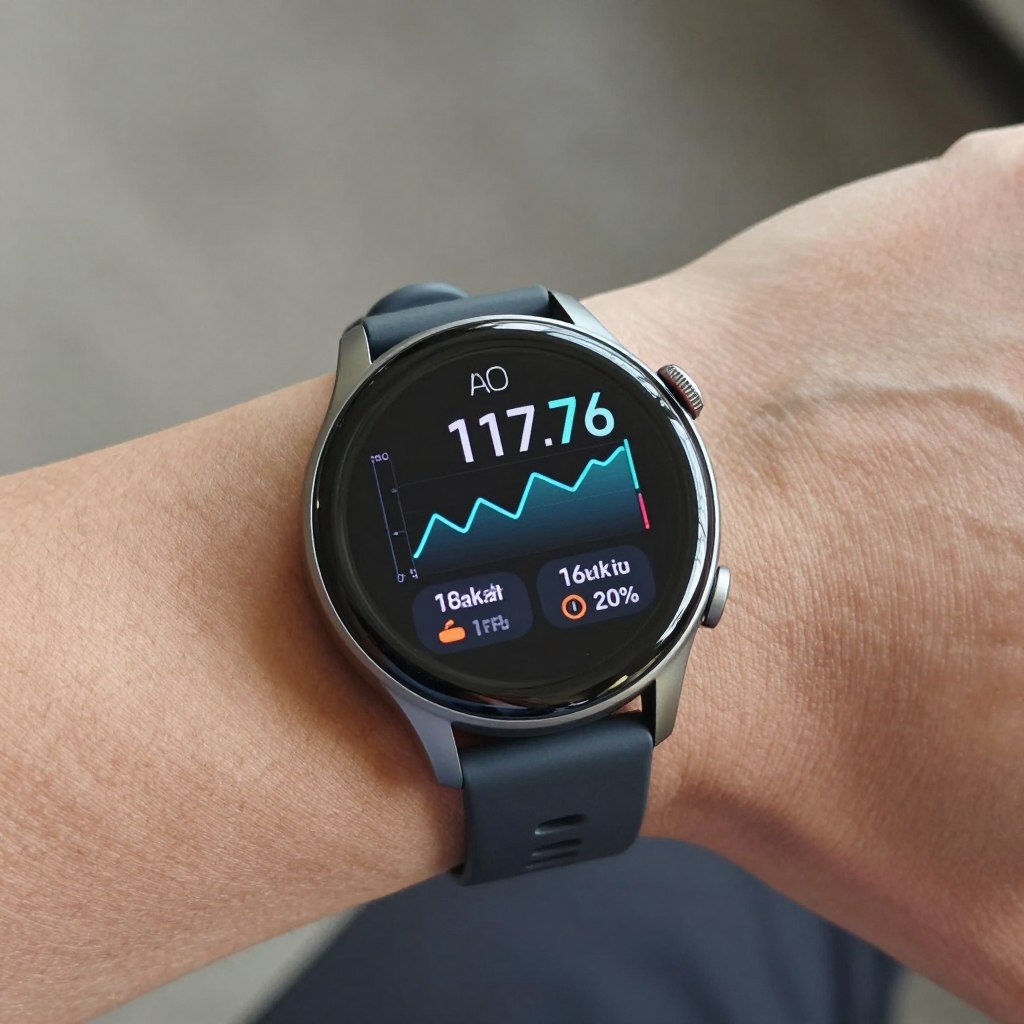
The revolution in non-invasive biometric monitoring represents one of the most significant breakthroughs in AI-powered health monitoring. By 2026, wearable devices can now measure metrics that previously required invasive procedures or clinical visits, all without breaking the skin or causing discomfort.
Breakthrough Non-Invasive Monitoring Technologies
Continuous Blood Glucose Monitoring
Using a combination of advanced spectroscopy and machine learning algorithms, today’s wearables can continuously monitor blood glucose levels through the skin. This technology has been transformative for diabetes management and has also become popular among non-diabetics for optimizing energy levels and metabolic health.

Cuffless Blood Pressure Monitoring
Continuous, cuffless blood pressure monitoring has become standard in premium wearables. Using a combination of optical sensors, bioimpedance measurements, and sophisticated AI algorithms, these devices track blood pressure throughout the day, identifying patterns and triggers that affect cardiovascular health.
Beyond Vital Signs: Advanced Biomarkers
Hydration Analysis
Modern wearables assess hydration status through bioimpedance analysis and sweat composition, providing real-time guidance on fluid intake needs based on activity level, environmental conditions, and individual physiology.
Stress Biomarkers
Advanced sensors can now detect cortisol levels and other stress biomarkers through skin analysis, enabling precise stress monitoring and timely interventions to support mental wellbeing.
Inflammatory Markers
Cutting-edge wearables can detect subtle changes in inflammatory markers, helping identify potential infections or inflammatory responses before obvious symptoms develop.
Discover Non-Invasive Health Monitoring
Learn how advanced non-invasive biometric monitoring can provide comprehensive health insights without discomfort or inconvenience.
Seamless Healthcare Integration: Connecting Your Health Ecosystem

By 2026, the fragmentation that once plagued health technology has been largely resolved. Today’s AI-powered health monitoring systems function as part of an interconnected health ecosystem, seamlessly sharing data (with appropriate permissions) between devices, electronic health records (EHRs), telemedicine platforms, and healthcare providers.
This integration has transformed the healthcare experience, eliminating redundant tests and questionnaires while ensuring that all stakeholders have access to comprehensive, up-to-date health information. The result is more coordinated care, fewer medical errors, and a significantly improved patient experience.
Key Integration Advancements
Universal Health Data Standards
The widespread adoption of universal health data standards has enabled different systems and devices to communicate effectively. Your wearable data can now be seamlessly incorporated into your medical record, providing healthcare providers with valuable context for clinical decisions.
Secure Data Exchange
Advanced encryption and blockchain-based verification systems ensure that health data can be shared securely between authorized parties. Granular permission controls allow you to specify exactly what information is shared with which providers or services.
Contextual Health Insights
AI systems can now analyze data across your entire health ecosystem to provide contextual insights that would be impossible from isolated data sources. This holistic view enables more accurate diagnoses and more effective treatment plans.
Real-World Applications of Integrated Health Systems
Enhanced Telemedicine
Telemedicine appointments are now informed by real-time and historical data from your wearable devices. When you connect with a healthcare provider, they already have access to comprehensive health metrics, allowing for more productive consultations focused on analysis and recommendations rather than data collection.
Medication Management
Integrated health systems monitor the effects of medications on your vital signs and other health metrics, helping to optimize dosages and identify potential side effects early. AI algorithms can suggest adjustments based on your body’s specific response, which your healthcare provider can review and approve.
Privacy Spotlight: All integrated health systems now adhere to enhanced privacy standards that go beyond traditional regulations. Users maintain ownership of their health data and can revoke access at any time. AI-powered anonymization techniques ensure that even when data is used for research or improvement of health systems, personal identifiers are protected.
Experience Connected Healthcare
Learn how integrated AI-powered health monitoring can streamline your healthcare experience and improve coordination between your devices and healthcare providers.
The Rise of “Invisible” Wearables: Health Monitoring Without Intrusion

Perhaps the most striking evolution in AI-powered health monitoring has been the shift toward “invisible” wearables—devices that blend seamlessly into daily life without announcing their technological purpose. These discreet monitoring solutions have dramatically increased adoption rates by eliminating the stigma sometimes associated with medical devices and reducing the cognitive burden of health monitoring.
Leading Categories of Invisible Wearables
Smart Jewelry
Smart rings and necklaces have evolved into sophisticated health monitoring devices that rival the capabilities of earlier smartwatches. Using miniaturized sensors and efficient algorithms, these fashionable accessories continuously track vital signs, activity levels, and sleep patterns without sacrificing style or comfort.

Smart Textiles
Clothing with embedded sensors has become mainstream, with everyday garments capable of monitoring a wide range of health metrics. These smart textiles are indistinguishable from regular clothing in appearance and comfort but provide continuous health monitoring throughout the day.

Adhesive Health Patches
Ultra-thin, nearly invisible adhesive patches can now be worn for up to two weeks, continuously monitoring multiple health parameters. These waterproof patches are comfortable enough to forget you’re wearing them, yet powerful enough to track everything from heart rhythm to glucose levels.

Benefits of Invisible Health Monitoring
Advantages of Invisible Wearables
- Increased user compliance due to comfort and convenience
- Reduced stigma associated with medical monitoring devices
- Continuous data collection without user intervention
- Seamless integration into daily routines
- Enhanced privacy as monitoring is not visibly apparent to others
Challenges Being Addressed
- Battery life limitations in miniaturized devices
- Ensuring accuracy across diverse body types and skin tones
- Balancing data density with power consumption
- Maintaining durability in everyday use conditions
- Providing intuitive interfaces for devices without screens
Discover Invisible Health Monitoring
Explore how discreet, “invisible” wearables can provide comprehensive health monitoring without disrupting your daily life or style.
Enabling Technologies: The Building Blocks of AI Health Monitoring
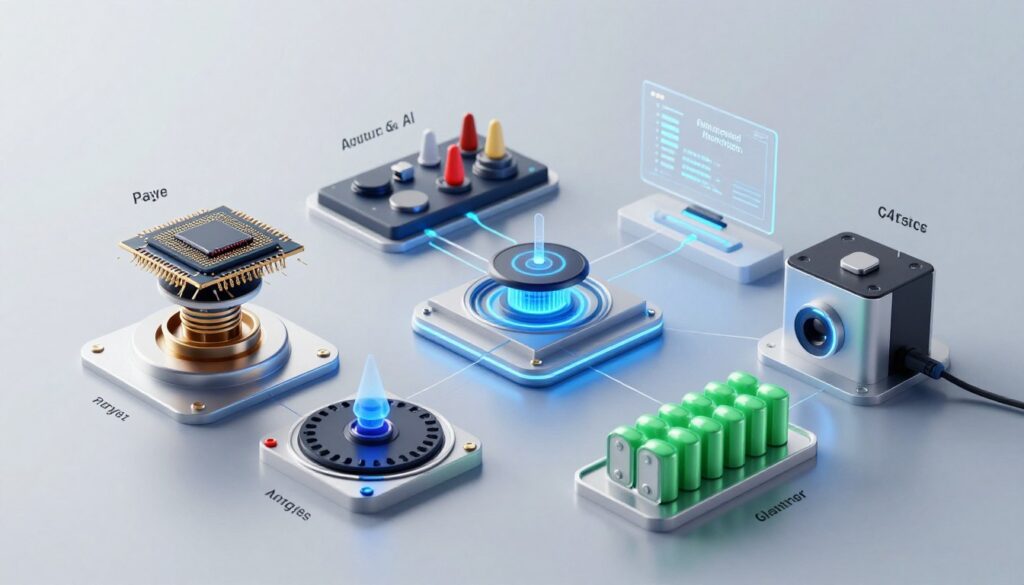
The remarkable capabilities of today’s AI-powered health monitoring systems are built upon several key technological advancements that have matured significantly by 2026. Understanding these underlying technologies helps appreciate how modern wearables achieve their impressive combination of accuracy, efficiency, and intelligence.
Core Enabling Technologies
Neural Processing Units (NPUs)
Specialized AI chips designed specifically for health applications now power even the smallest wearables. These energy-efficient NPUs can run sophisticated machine learning models locally, enabling real-time analysis without constant cloud connectivity while preserving battery life and privacy.
Advanced Sensor Fusion
Modern wearables combine data from multiple sensor types—optical, electrical, chemical, and mechanical—to achieve unprecedented accuracy. Sophisticated sensor fusion algorithms compensate for individual sensor limitations and environmental variations, ensuring reliable measurements across diverse conditions.
Health-Specific AI Models
AI models have been developed specifically for health applications, trained on diverse datasets representing various demographics, conditions, and environments. These specialized models understand the nuances of physiological data and can identify subtle patterns that generic AI systems might miss.
Technological Breakthroughs Enabling Modern Health Wearables
| Technology | Key Advancement | Impact on Health Monitoring |
| Flexible Bioelectronics | Ultra-thin, stretchable circuits that conform to body contours | Enables comfortable, long-term wear of sensors on various body locations |
| Energy Harvesting | Devices that generate power from body heat, movement, or ambient light | Extends battery life or eliminates the need for traditional batteries |
| Microfluidics | Miniaturized systems for analyzing tiny fluid samples | Enables chemical analysis of sweat and interstitial fluid in wearable form factors |
| Federated Learning | AI models that improve without centralizing sensitive data | Enhances privacy while allowing systems to learn from diverse user experiences |
| Quantum Sensors | Sensors that leverage quantum effects for enhanced sensitivity | Detects subtle physiological signals previously undetectable in wearable formats |
Technical Insight: The shift toward edge computing in health wearables has been transformative. By processing health data directly on the device rather than sending everything to the cloud, modern systems achieve faster response times, enhanced privacy, and continued functionality even when internet connectivity is unavailable. This approach is particularly valuable for health applications where real-time insights can be critical.
Challenges and Considerations: Navigating the Future of Health Monitoring

Despite the remarkable progress in AI-powered health monitoring, several important challenges and considerations remain as we navigate this rapidly evolving landscape. Addressing these issues thoughtfully is essential to ensure that the benefits of these technologies are realized equitably and responsibly.
Key Challenges in AI Health Monitoring
Data Privacy and Security
As health monitoring becomes more comprehensive, the sensitivity of collected data increases. While significant advances in privacy-preserving AI and secure data storage have been made, maintaining robust protection of health information remains an ongoing challenge that requires constant vigilance and innovation.
Regulatory Frameworks
Regulatory bodies have worked to keep pace with technological advancements, but the rapid evolution of AI health monitoring continues to present challenges for timely and appropriate oversight. Finding the right balance between ensuring safety and enabling innovation remains a complex task.
Health Equity
Ensuring that advanced health monitoring technologies are accessible to diverse populations—regardless of socioeconomic status, geographic location, or technical literacy—is crucial. Efforts to address the “digital health divide” have made progress but require continued attention and investment.
Ethical Considerations
How can we ensure AI health systems are transparent and explainable?
Modern AI health systems now incorporate explainable AI (XAI) techniques that make their decision-making processes more transparent. These approaches allow users and healthcare providers to understand why a particular health insight or recommendation was generated, building trust and enabling appropriate human oversight.
What safeguards prevent over-reliance on AI health monitoring?
Today’s systems are designed with clear limitations and appropriate confidence indicators. They explicitly communicate when a finding is uncertain or when professional medical consultation is recommended. Educational initiatives have also helped users understand the complementary role of AI in healthcare rather than viewing it as a replacement for professional medical care.
How are algorithmic biases being addressed in health AI?
Significant progress has been made in developing diverse training datasets and implementing bias detection and mitigation techniques. Regular auditing of AI health systems for performance across different demographic groups has become standard practice, though vigilance and continuous improvement remain necessary.
Important Note: While AI-powered health monitoring provides valuable insights, it should complement rather than replace professional medical care. Always consult healthcare providers for proper diagnosis and treatment decisions, especially for serious health concerns.
The Future Impact: Transforming Personal Healthcare

As AI-powered health monitoring continues to evolve, its impact on personal healthcare and the doctor-patient relationship will be profound. The technologies we’ve explored are collectively creating a new paradigm of healthcare that is more proactive, personalized, and participatory than ever before.
Transforming the Healthcare Experience
From Episodic to Continuous Care
The traditional model of episodic healthcare—where interactions occur primarily when symptoms arise—is giving way to continuous health management. AI-powered monitoring creates an ongoing dialogue about health, with regular insights and guidance that help maintain wellness rather than just addressing illness.
From Reactive to Preventive
Perhaps the most significant shift is from reactive treatment to preventive care. By identifying subtle changes in health parameters before they manifest as symptoms, AI monitoring enables interventions at the earliest possible stage, often preventing conditions from developing or progressing.
Evolving Doctor-Patient Relationships
The relationship between healthcare providers and patients is being redefined in positive ways. Rather than diminishing the role of healthcare professionals, AI-powered health monitoring is enhancing these relationships by providing richer context, enabling more informed discussions, and allowing providers to focus on aspects of care where human expertise and empathy are most valuable.
“We’re seeing a fundamental shift from patients as passive recipients of care to active participants in their health journey. AI-powered monitoring gives individuals unprecedented insight into their own health, enabling them to engage with healthcare providers as true partners in decision-making.”
The Road Ahead
Looking beyond 2026, we can anticipate further integration of AI health monitoring into our daily lives and healthcare systems. Advances in quantum computing, biological sensors, and human-AI collaboration will likely enable even more sophisticated health insights and interventions. As these technologies continue to mature, the vision of truly personalized, preventive healthcare for all comes increasingly within reach.
The future of AI-powered health monitoring is not about technology replacing human care, but about technology enhancing our capacity to care for ourselves and each other. By providing timely, personalized insights and reducing the burden of routine monitoring and analysis, these systems free us to focus on the uniquely human aspects of health and wellbeing—connection, compassion, and meaningful action.
Conclusion: Embracing the AI Health Monitoring Revolution
The landscape of AI-powered health monitoring in 2026 represents a remarkable convergence of artificial intelligence, sensor technology, and human-centered design. From predictive analytics that forecast health issues before they arise to invisible wearables that blend seamlessly into our lives, these innovations are collectively transforming how we understand and manage our health.
While challenges remain—particularly around privacy, equity, and regulatory frameworks—the trajectory is clear: AI-powered health monitoring is becoming an integral part of a more proactive, personalized healthcare ecosystem. As these technologies continue to evolve, they promise to empower individuals with unprecedented insight into their own wellbeing while enabling healthcare providers to deliver more timely, targeted, and effective care.
The future of health is not just about treating illness but about optimizing wellness. AI-powered health monitoring is the foundation of this new paradigm—a paradigm where technology serves as a partner in our health journey, augmenting human capability and enabling us all to live healthier, more informed lives.