
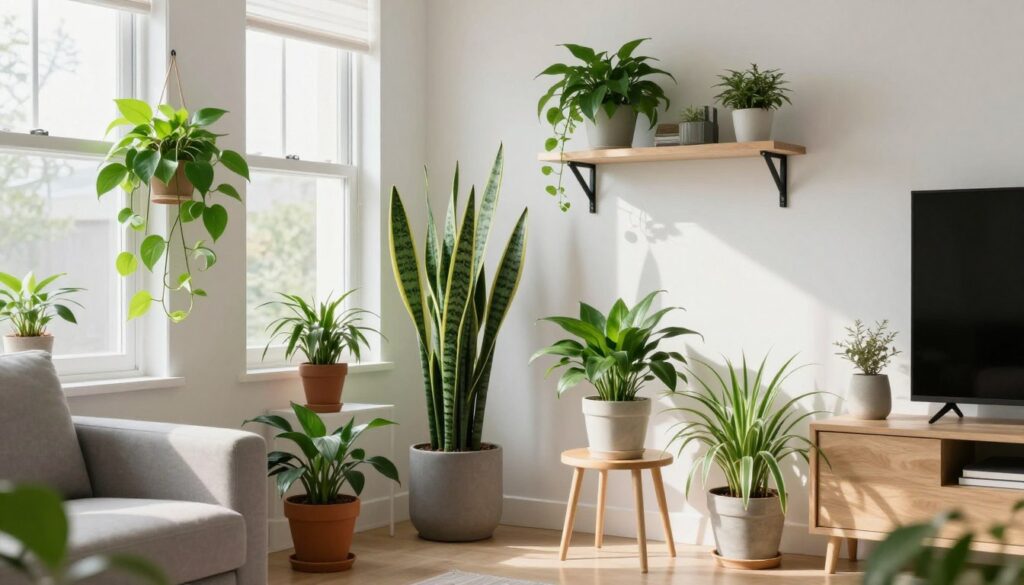
Starting your plant journey doesn’t have to be intimidating. The right beginner-friendly plants can thrive with minimal attention while bringing life and beauty to your space. Whether you’re a first-time plant parent or someone who hasn’t had much luck with greenery in the past, this guide will introduce you to resilient, forgiving plants that can withstand a little neglect and still flourish.
Indoor plants do more than just brighten your home—they purify air, boost mood, and create a more peaceful environment. By starting with these easy-care varieties, you’ll build confidence and develop the skills to expand your indoor garden over time.
Disclosure & Information Note:
This post may contain affiliate links, which means I may earn a small commission if you choose to make a purchase at no additional cost to you. I only recommend products and resources I genuinely believe add value. Portions of this content were created with the assistance of AI tools and then carefully reviewed, edited, and fact-checked by me for accuracy and authenticity. All information is provided for general informational purposes only and is not intended as medical, financial, legal, or professional advice. Always consult a qualified professional before making decisions related to your health, finances, safety, or lifestyle.
Why Choose Easy-Care Plants as a Beginner
Before diving into specific plants, let’s understand why some houseplants are better suited for beginners than others:
- They forgive inconsistent watering and care routines
- They adapt to various light conditions in your home
- They resist common pests and diseases
- They grow at a manageable pace
- They communicate clearly when they need attention
Starting with these resilient plants helps you learn basic care skills without the frustration of losing plants to simple mistakes. As you gain experience, you can gradually add more demanding varieties to your collection.
1. Snake Plant (Sansevieria trifasciata)
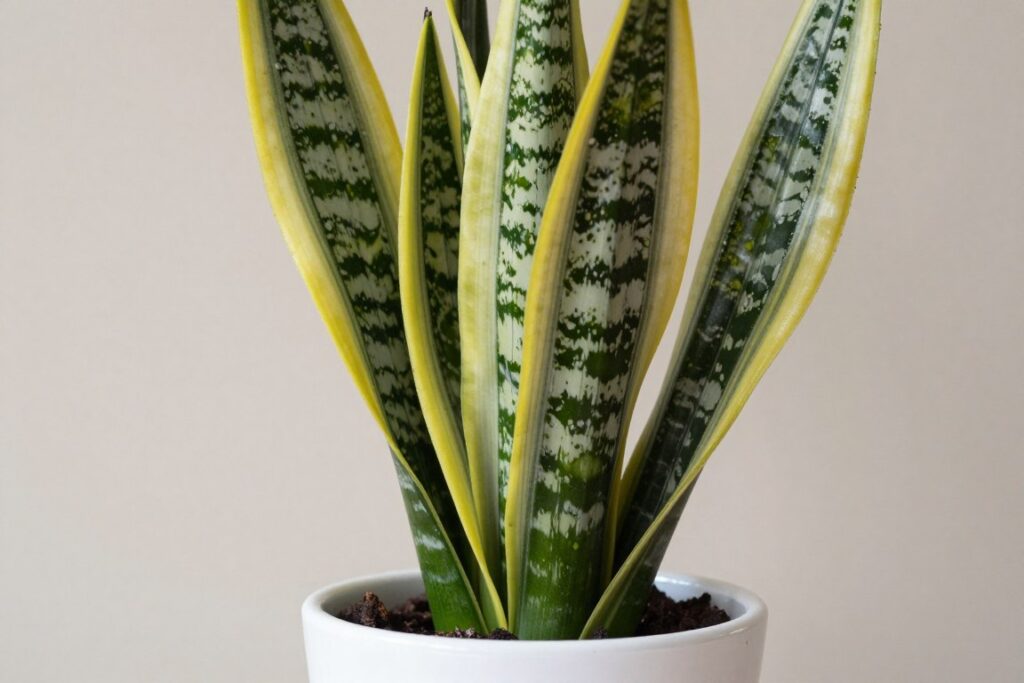
The snake plant, also known as mother-in-law’s tongue, is practically indestructible and perfect for beginners. Its striking upright leaves with yellow or white edges add architectural interest to any space.
Care Requirements:
- Light: Tolerates low light but thrives in bright, indirect light
- Water: Allow soil to dry completely between waterings (every 2-6 weeks)
- Humidity: Adapts to any humidity level
Why it’s perfect for beginners: Snake plants can survive weeks of neglect and low light conditions that would kill other plants. They’re also excellent air purifiers, removing toxins while releasing oxygen at night.
Pro tip: The quickest way to kill a snake plant is overwatering. When in doubt, wait another week before watering.
2. Pothos (Epipremnum aureum)
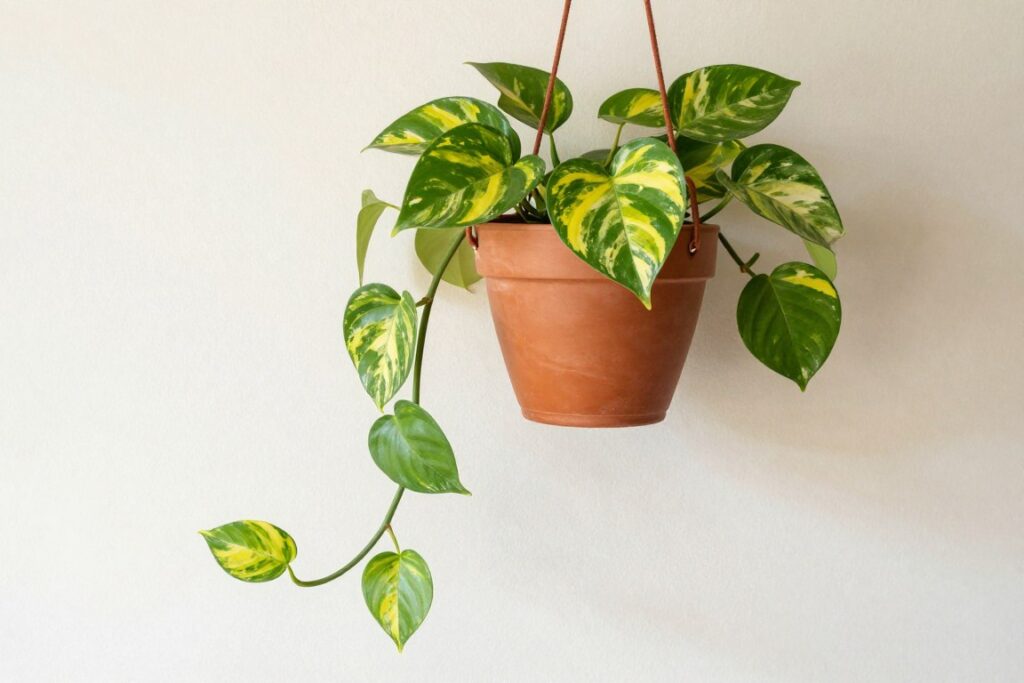
Pothos plants are beloved for their heart-shaped leaves and trailing vines that can transform any shelf or hanging basket. Available in varieties like golden, marble queen, and neon, there’s a pothos for every style preference.
Care Requirements:
- Light: Adaptable to low or bright indirect light (variegated varieties need more light)
- Water: Allow the top inch of soil to dry out between waterings
- Humidity: Normal household humidity is fine
Why it’s perfect for beginners: Pothos clearly communicates when it needs water by drooping slightly, but recovers quickly once watered. It’s also incredibly easy to propagate in water, allowing you to multiply your plants.
Pro tip: Trim your pothos occasionally to encourage fuller growth. Place cuttings in water to grow new plants for friends.
3. ZZ Plant (Zamioculcas zamiifolia)

The ZZ plant has become increasingly popular for its glossy, dark green leaves and ability to thrive in challenging conditions. Its unique appearance adds a touch of sophistication to any room.
Care Requirements:
- Light: Tolerates low light but grows best in medium, indirect light
- Water: Allow soil to dry out completely between waterings (every 2-3 weeks)
- Humidity: Adapts to any humidity level
Why it’s perfect for beginners: ZZ plants store water in their thick rhizomes, allowing them to survive long periods without water. They’re extremely resistant to pests and grow slowly, requiring minimal maintenance.
Pro tip: The naturally shiny leaves don’t need leaf shine products—simply dust them occasionally with a damp cloth to keep them looking their best.
4. Spider Plant (Chlorophytum comosum)
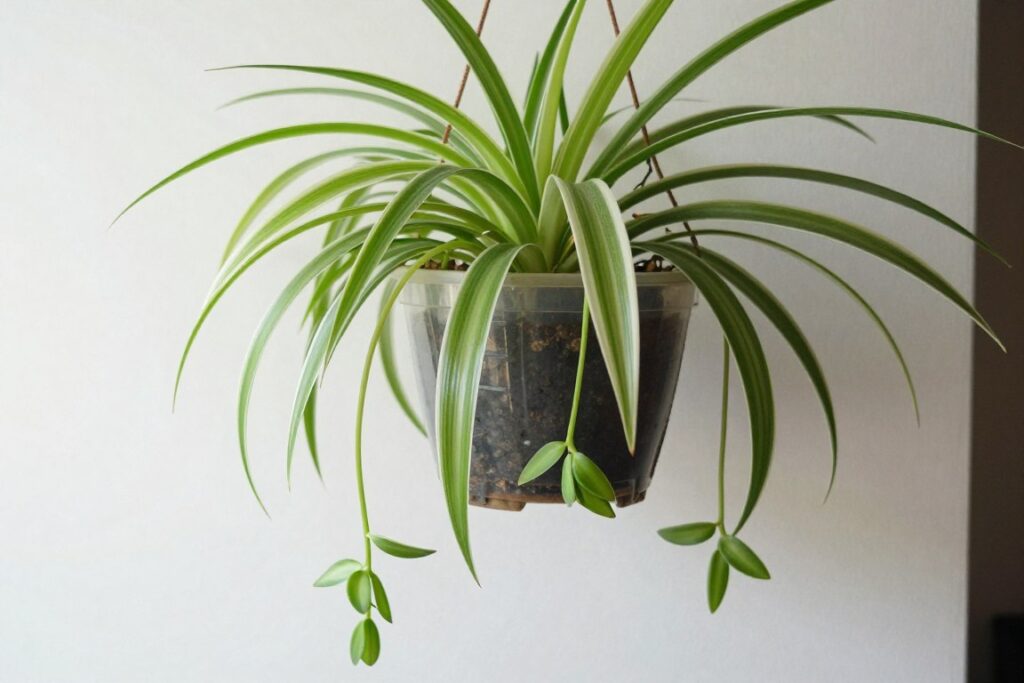
Spider plants are cheerful, fast-growing houseplants with arching variegated leaves. They produce baby “spiderettes” on long stems, adding visual interest and offering easy propagation opportunities.
Care Requirements:
- Light: Bright, indirect light (avoid direct sun which can scorch leaves)
- Water: Keep soil lightly moist, allowing the top inch to dry between waterings
- Humidity: Prefers higher humidity but adapts to normal household conditions
Why it’s perfect for beginners: Spider plants communicate their needs clearly—brown tips often indicate too little water or too much fluoride/chlorine in tap water. They’re also excellent air purifiers and safe for homes with pets.
Pro tip: When your spider plant produces babies, leave them attached until they develop small roots, then snip them off and plant directly in soil for new plants.
5. Peace Lily (Spathiphyllum)
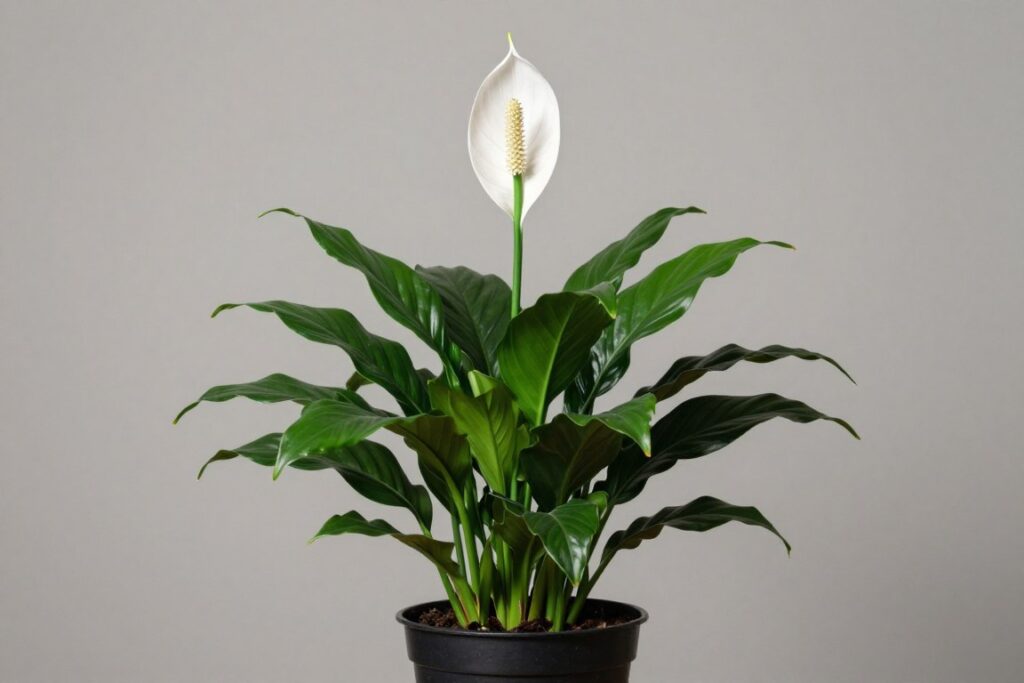
Peace lilies combine lush green foliage with elegant white “flowers” (actually modified leaves called spathes). They’re one of the few flowering plants that can thrive in lower light conditions.
Care Requirements:
- Light: Low to medium indirect light (more light encourages more flowers)
- Water: Keep soil consistently moist but not soggy
- Humidity: Enjoys higher humidity but adapts to average conditions
Why it’s perfect for beginners: Peace lilies dramatically droop when thirsty, but quickly perk up after watering, making it obvious when they need attention. They’re also excellent air purifiers, removing common household toxins.
Pro tip: If your peace lily isn’t flowering, it might need more light. Move it to a brighter spot (still avoiding direct sun) to encourage blooms.
6. Rubber Plant (Ficus elastica)
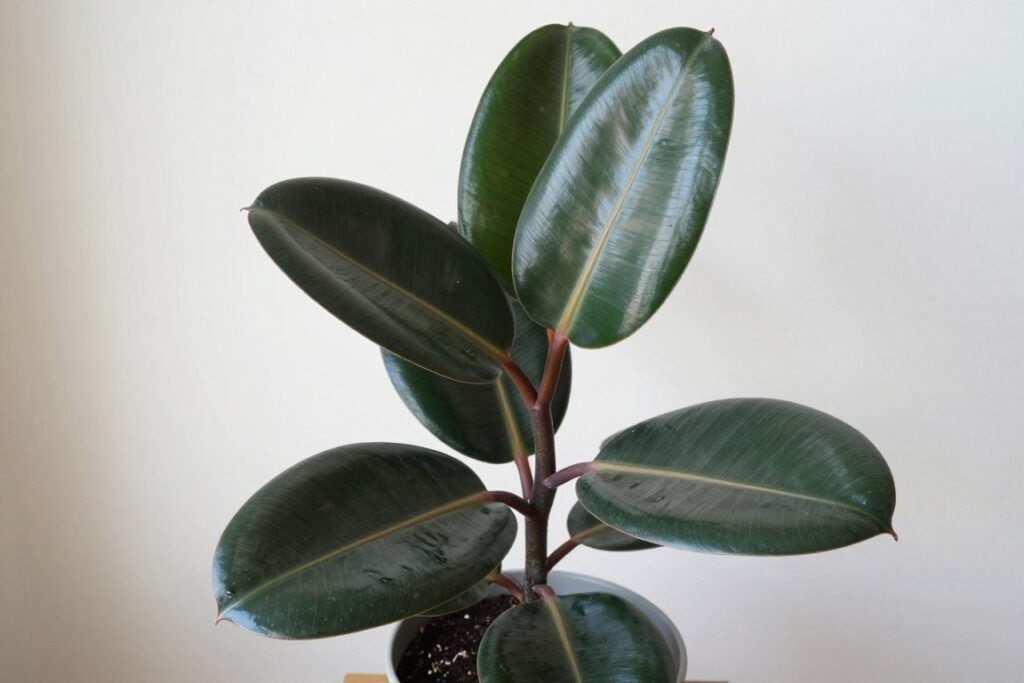
The rubber plant makes a bold statement with its large, glossy leaves in deep green, burgundy, or variegated patterns. It can grow into a stunning floor plant over time but is easy to keep at a manageable size.
Care Requirements:
- Light: Medium to bright indirect light
- Water: Allow the top 1-2 inches of soil to dry between waterings
- Humidity: Prefers moderate humidity but adapts to normal household conditions
Why it’s perfect for beginners: Rubber plants are resilient and communicate their needs through their leaves—dropping leaves often indicate overwatering, while curling leaves suggest underwatering.
Pro tip: Wipe the large leaves with a damp cloth monthly to remove dust and keep them shiny. Avoid leaf shine products, which can clog the plant’s pores.
7. Chinese Evergreen (Aglaonema)
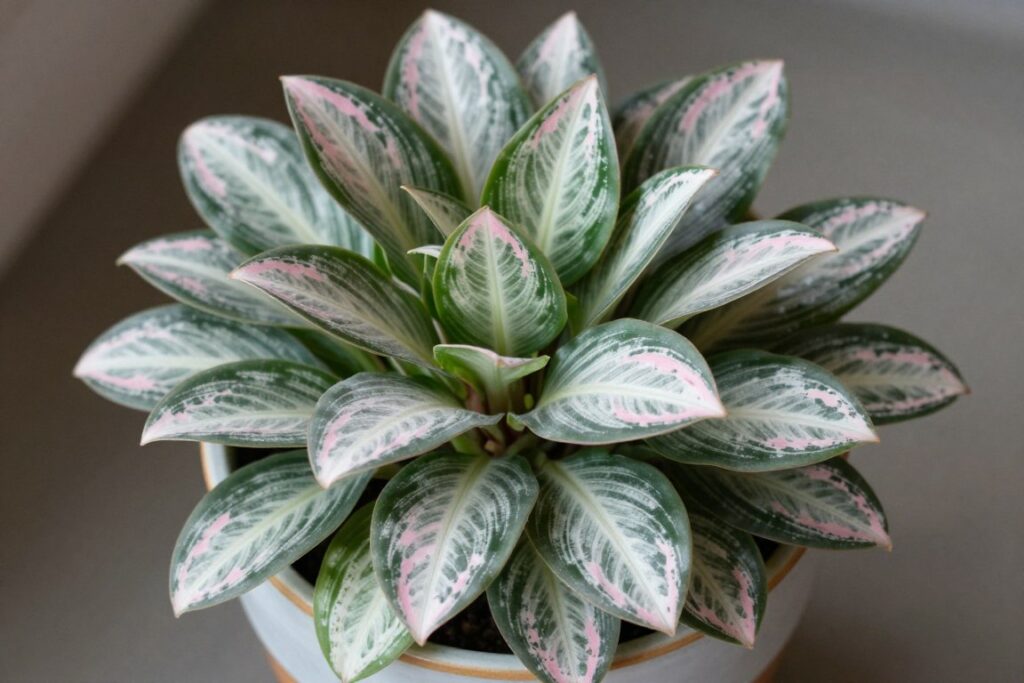
Chinese evergreens offer beautiful foliage in various patterns and colors, from silver-speckled green to vibrant pink. Their compact growth habit makes them perfect for tabletops and shelves.
Care Requirements:
- Light: Low to medium indirect light (variegated varieties need more light)
- Water: Keep soil lightly moist, allowing the top inch to dry between waterings
- Humidity: Enjoys higher humidity but tolerates average conditions
Why it’s perfect for beginners: Chinese evergreens grow well in conditions that challenge other plants, including lower light and fluctuating humidity. They’re slow-growing and rarely need repotting.
Pro tip: The more variegation and color in the leaves, the more light the plant needs. Darker green varieties can tolerate dimmer conditions.
8. Philodendron (Philodendron spp.)

Philodendrons come in climbing and non-climbing varieties, with the heart-leaf philodendron being one of the most popular for beginners. Their heart-shaped leaves and adaptable nature make them longtime favorites.
Care Requirements:
- Light: Low to bright indirect light (adapts to various conditions)
- Water: Allow the top 1-2 inches of soil to dry between waterings
- Humidity: Adaptable to normal household humidity
Why it’s perfect for beginners: Philodendrons are incredibly forgiving and can bounce back from occasional neglect. They’re also easy to propagate and rarely troubled by pests.
Pro tip: For climbing varieties, provide a moss pole or trellis to support their growth. This encourages larger leaves and a more dramatic appearance.
9. Jade Plant (Crassula ovata)

Jade plants are popular succulents with thick, oval leaves and a tree-like growth habit. They can live for decades and are often passed down through generations as heirloom plants.
Care Requirements:
- Light: Bright, direct to indirect light
- Water: Allow soil to dry completely between waterings (every 2-3 weeks)
- Humidity: Prefers dry conditions
Why it’s perfect for beginners: Jade plants thrive on neglect and actually prefer to be left alone. Their thick leaves store water, allowing them to withstand occasional drought. They’re also believed to bring good luck and prosperity.
Pro tip: Jade plants grow slowly but can become top-heavy. Use a heavy pot with well-draining soil to prevent tipping as they mature.
10. Aloe Vera (Aloe barbadensis miller)
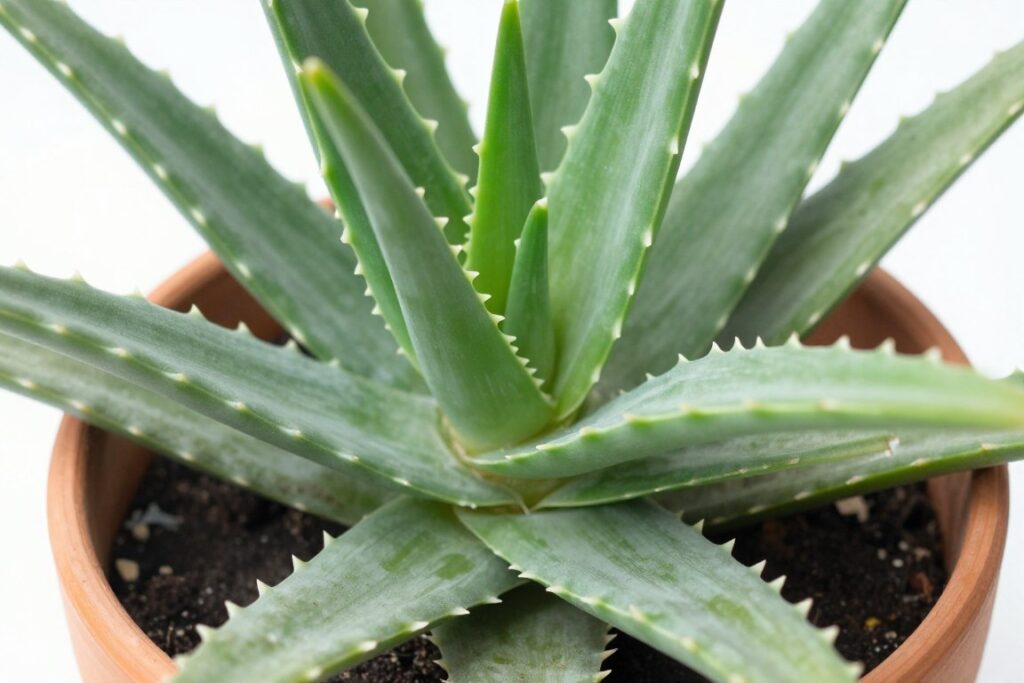
Aloe vera combines beauty with practicality—its thick, fleshy leaves contain a soothing gel that can be used to treat minor burns and skin irritations. This succulent is both decorative and useful.
Care Requirements:
- Light: Bright, indirect light
- Water: Allow soil to dry completely between waterings (every 3 weeks)
- Humidity: Tolerates dry conditions
Why it’s perfect for beginners: Aloe vera is drought-tolerant and clearly shows when it’s being overwatered (leaves become soft and mushy). It also produces offsets (pups) that can be separated to create new plants.
Pro tip: If you want to use the gel medicinally, harvest from the outer, mature leaves by cutting them at the base, then splitting them open to access the gel.
Essential Beginner Plant Care Tips
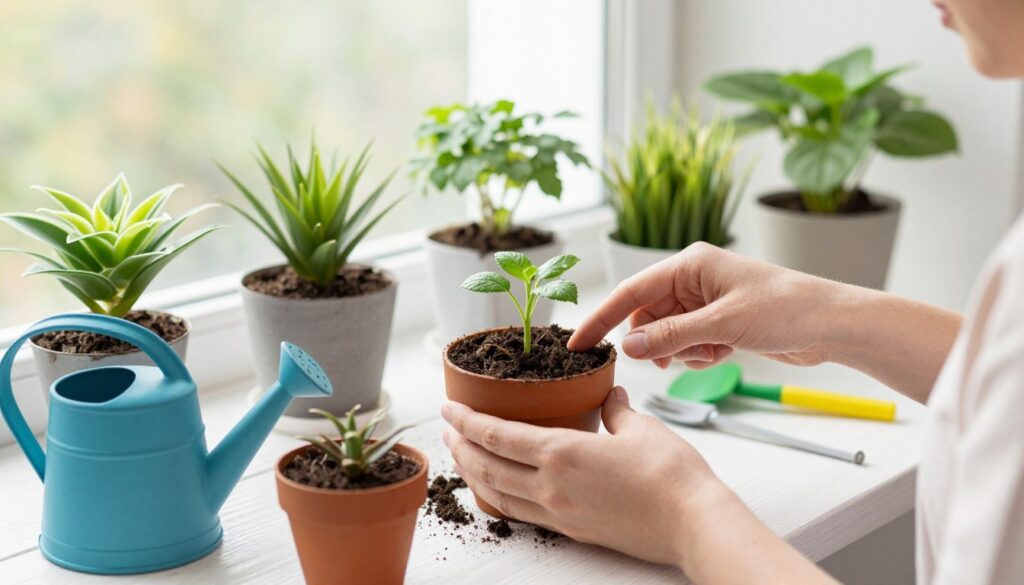
Even the most resilient plants need some basic care. Here are fundamental tips to help your plants thrive:
Watering Wisdom
- Always check soil moisture before watering
- Use your finger to test the top 1-2 inches of soil
- Water thoroughly until it drains from the bottom
- Empty drainage trays to prevent root rot
- Water less in winter when growth slows
Light Requirements
- Understand your home’s light conditions
- Rotate plants regularly for even growth
- Move plants seasonally as light changes
- Clean leaves to maximize light absorption
- Use sheer curtains to filter harsh direct sun
General Maintenance
- Use well-draining potting mix appropriate for your plant
- Fertilize sparingly—less is more for beginners
- Remove dead or yellowing leaves promptly
- Inspect regularly for pests
- Repot only when necessary (roots visible at drainage holes)
Remember: It’s better to underwater than overwater most indoor plants. More houseplants die from too much water than too little!
Common Problems and Solutions
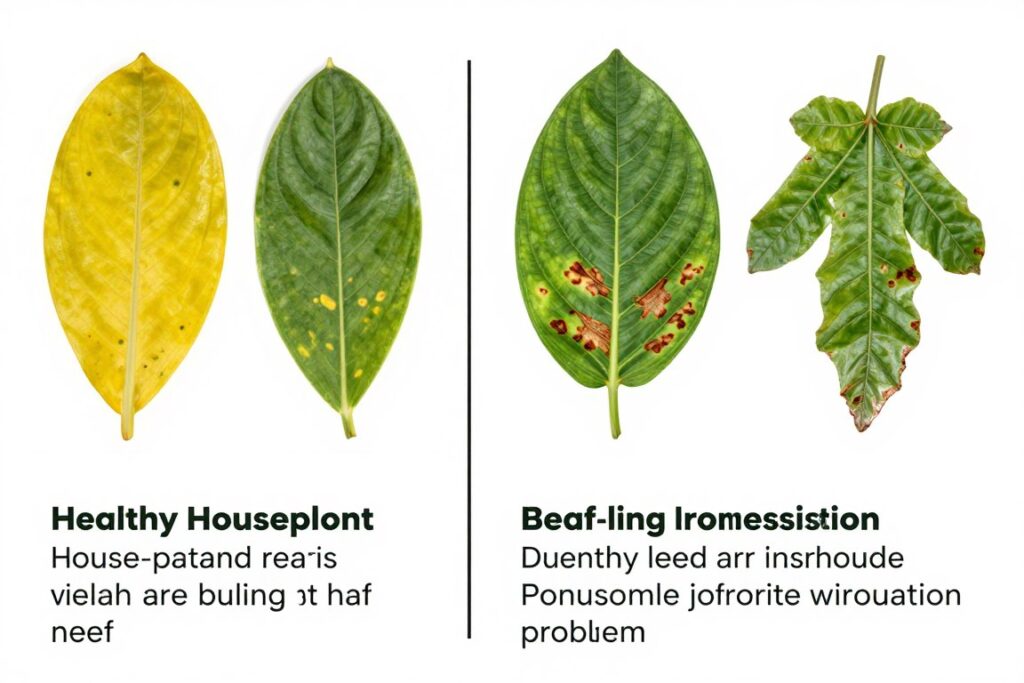
Even the easiest plants can develop issues. Here’s how to identify and solve common problems:
Yellowing Leaves
Usually indicates overwatering or poor drainage. Allow soil to dry more between waterings and ensure your pot has drainage holes. Can also signal nutrient deficiency in older plants.
Brown Leaf Tips
Often caused by low humidity, fluoride in tap water, or fertilizer buildup. Try increasing humidity, using filtered water, or flushing the soil occasionally.
Wilting Despite Moist Soil
May indicate root rot from overwatering. Check roots—healthy roots are firm and white/tan, while rotting roots are mushy and brown/black. Repot in fresh soil if needed.
Start Your Plant Journey with Confidence
Beginning your plant parenthood journey with these forgiving varieties sets you up for success. Remember that even experienced plant enthusiasts occasionally lose plants—it’s part of the learning process. The key is to observe your plants, learn their specific needs, and adjust your care accordingly.
As you gain confidence with these beginner-friendly plants, you’ll develop the skills and intuition to branch out to more challenging varieties. Before long, you’ll have a thriving indoor garden that brings joy, beauty, and better air quality to your home.