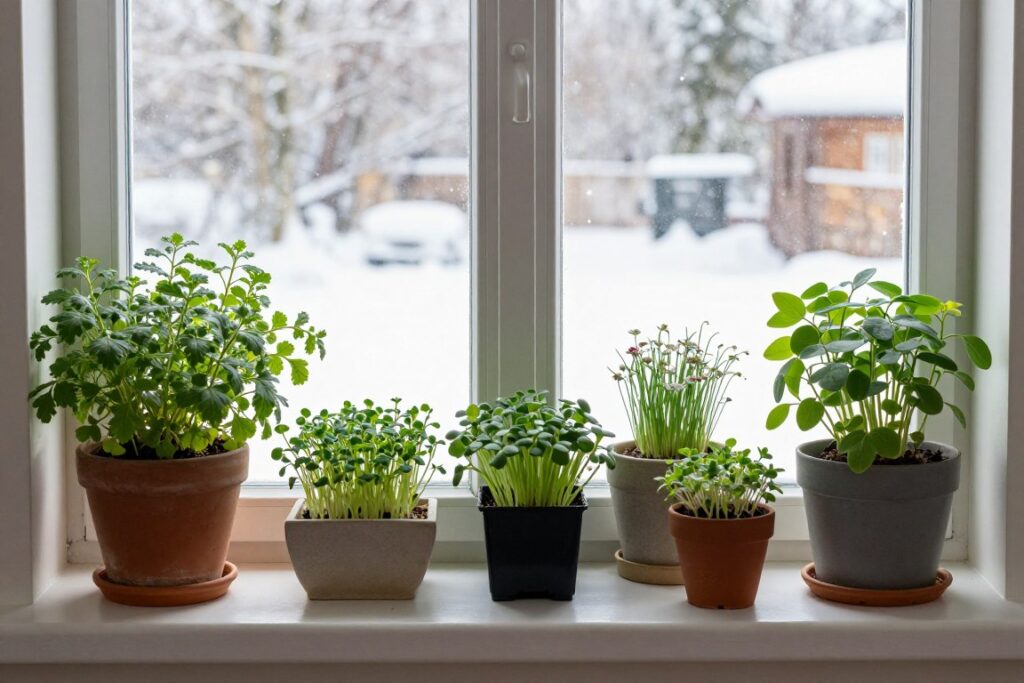

When winter’s chill settles in and outdoor gardens slumber under frost or snow, a vibrant winter windowsill garden can bring life, color, and fresh flavors into your home. Creating your own indoor garden isn’t just practical—it’s a rewarding way to nurture your green thumb year-round while enjoying homegrown herbs, greens, and even flowers during the coldest months. This guide will walk you through everything you need to know to transform your windowsills into productive growing spaces that brighten winter days.
Disclosure & Information Note:
This post may contain affiliate links, which means I may earn a small commission if you choose to make a purchase at no additional cost to you. I only recommend products and resources I genuinely believe add value. Portions of this content were created with the assistance of AI tools and then carefully reviewed, edited, and fact-checked by me for accuracy and authenticity. All information is provided for general informational purposes only and is not intended as medical, financial, legal, or professional advice. Always consult a qualified professional before making decisions related to your health, finances, safety, or lifestyle.
Benefits of a Winter Windowsill Garden
A winter windowsill garden offers numerous advantages beyond simply adding greenery to your home. Understanding these benefits can help motivate you to start your own indoor garden project:
- Fresh herbs and vegetables at your fingertips, reducing plastic packaging waste and grocery trips
- Improved indoor air quality as plants naturally filter toxins
- Natural humidity boost during dry winter months
- Mood enhancement and stress reduction through plant care
- Educational opportunity for children to learn about plant growth cycles
- Money savings on expensive store-bought herbs and microgreens
Planning Your Winter Windowsill Garden
Before purchasing plants or supplies, take time to plan your winter windowsill garden for the best chance of success. Proper planning helps ensure your plants thrive and your space remains functional.
Choosing the Right Location
The location of your windowsill garden significantly impacts plant health and growth. Consider these factors when selecting your growing space:
- Light direction: South-facing windows provide the most light (6+ hours daily), ideal for most edible plants. East and west-facing windows offer moderate light (4-6 hours), suitable for many herbs and leafy greens. North-facing windows provide minimal light (2-4 hours), best for shade-tolerant plants.
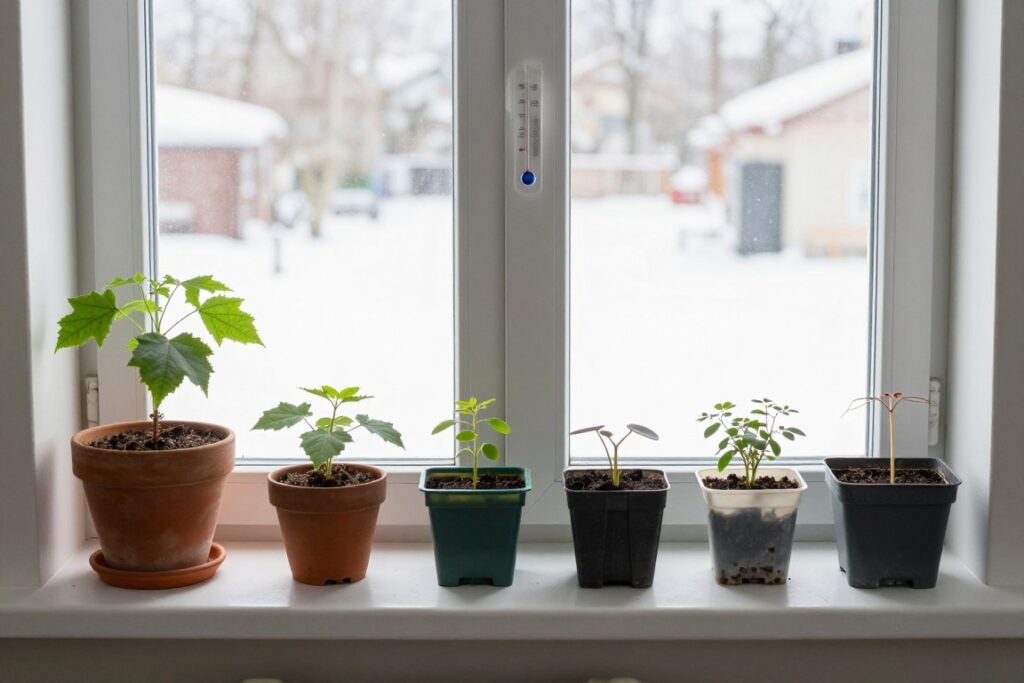
- Temperature stability: Choose windows away from drafts, heating vents, and radiators. Most indoor plants prefer temperatures between 65-75°F (18-24°C).
- Accessibility: Select locations you can easily reach for watering, harvesting, and maintenance.
- Space availability: Measure your windowsills to determine how many containers they can accommodate.
Selecting Appropriate Containers
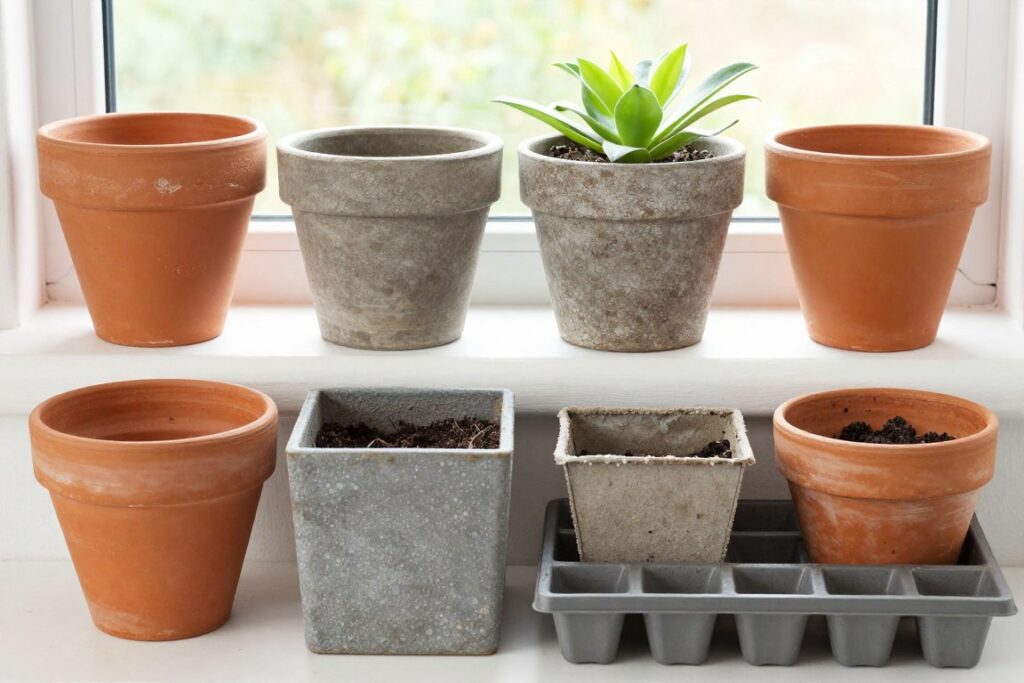
The right containers make a significant difference in plant health and windowsill protection. Consider these options:
- Traditional pots: Terracotta or ceramic pots provide good drainage and stability but can be heavy.
- Plastic containers: Lightweight, inexpensive, and retain moisture well. Recycled yogurt cups, takeout containers, or plastic bottles work great for seedlings.
- Self-watering planters: Ideal for busy gardeners, these containers have a water reservoir that plants can access as needed.
- Window boxes: These long, narrow containers maximize space and create a cohesive look.
- Repurposed items: Mason jars, tea tins, or coffee cans can be upcycled into charming planters (just add drainage holes).
Important: Whatever container you choose, ensure it has adequate drainage holes to prevent root rot. Place saucers or trays underneath to protect your windowsill from water damage.
Best Plants for Your Winter Windowsill Garden
Selecting the right plants is crucial for a successful winter windowsill garden. Focus on varieties that thrive in indoor conditions with limited space and light. Here are the best options categorized by type:
Herbs for Winter Windowsills
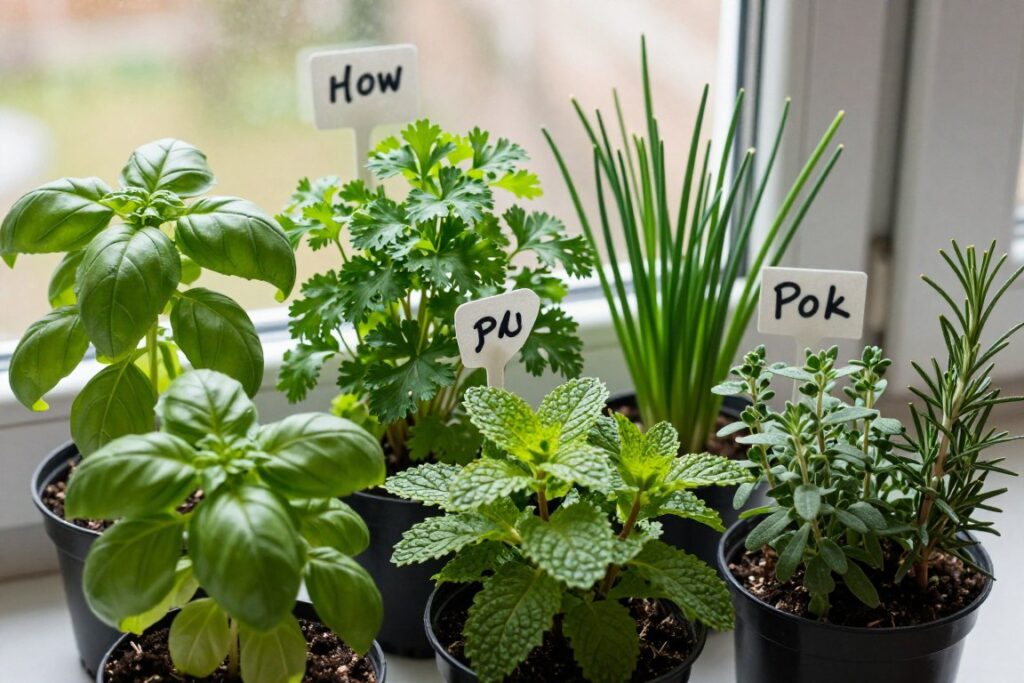
Herbs are perfect windowsill companions, offering fresh flavors for cooking while requiring minimal space. These varieties perform particularly well indoors during winter:
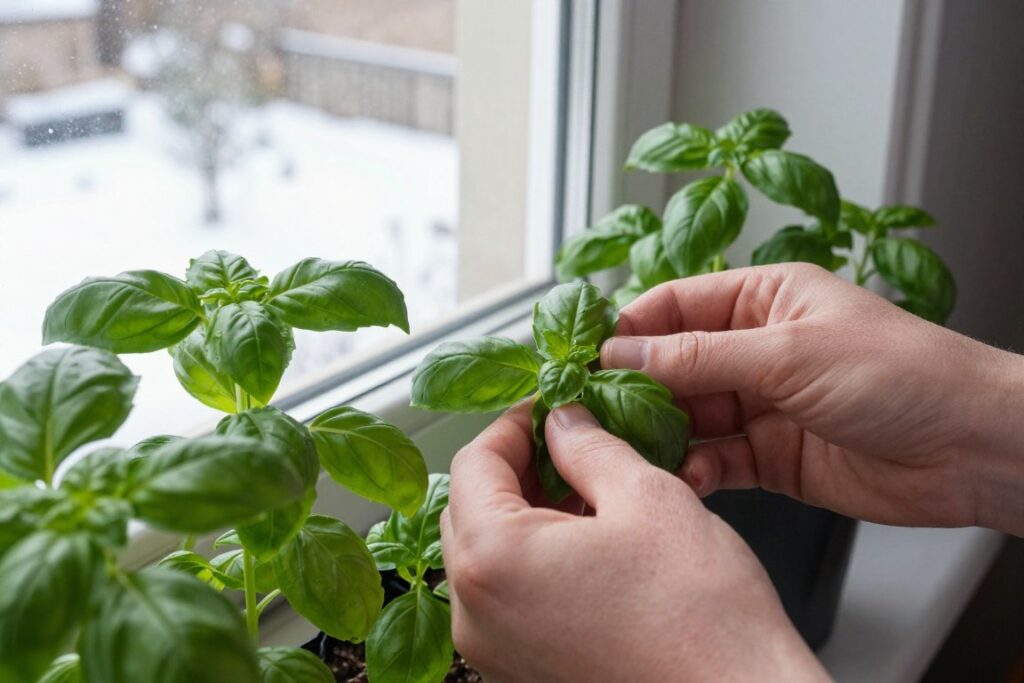
- Basil: Prefers warm, sunny spots. Harvest outer leaves regularly to encourage bushier growth.
- Mint: Vigorous grower that adapts well to indoor conditions. Keep in its own container as it spreads rapidly.
- Parsley: Tolerates lower light conditions and continues producing all winter. Rich in vitamin C.
- Chives: Easy to grow and harvest; simply snip what you need and they’ll regrow.
- Thyme: Drought-tolerant and compact, perfect for smaller containers.
- Rosemary: Needs excellent drainage and bright light but provides wonderful aroma and flavor.
Leafy Greens & Microgreens
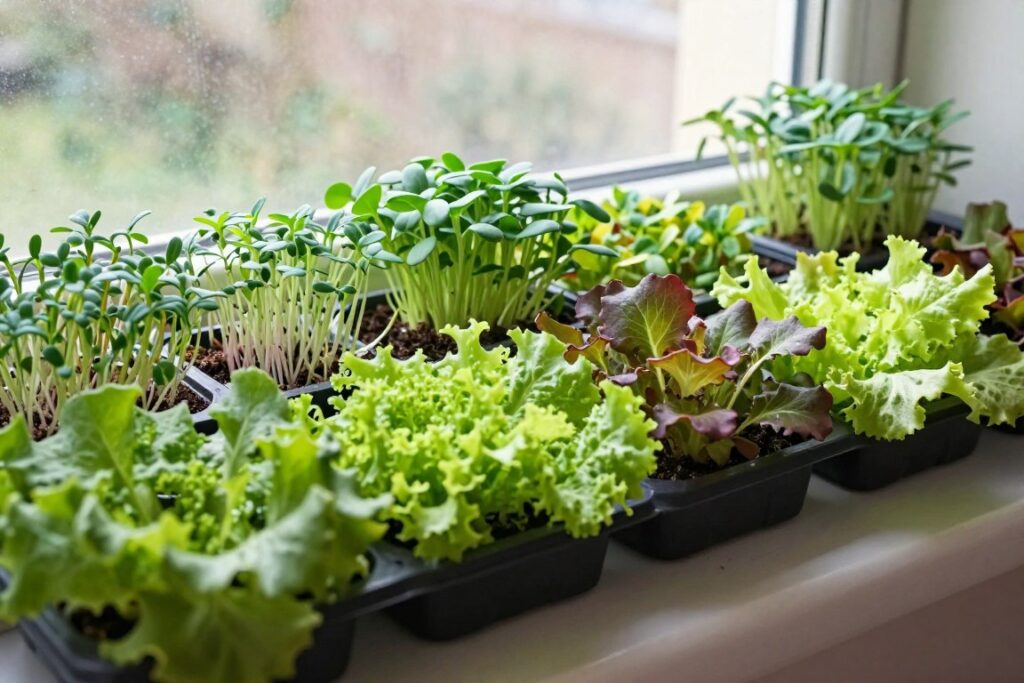
Leafy greens and microgreens grow quickly, allowing for multiple harvests throughout winter:
- Lettuce: Choose loose-leaf varieties for “cut and come again” harvesting. Baby lettuce can be ready in just 3-4 weeks.
- Spinach: Tolerates cooler temperatures and lower light conditions than many other greens.
- Arugula: Fast-growing with a peppery flavor that’s more pronounced when grown indoors.
- Kale: Baby kale leaves are tender and perfect for salads or smoothies.
- Microgreens: Ready to harvest in 7-14 days. Try radish, broccoli, sunflower, or pea shoot varieties for different flavors and nutrients.
- Pea Shoots: Sweet-tasting, fast-growing, and highly nutritious. Harvest when 6 inches tall.
Flowering Plants for Winter Cheer
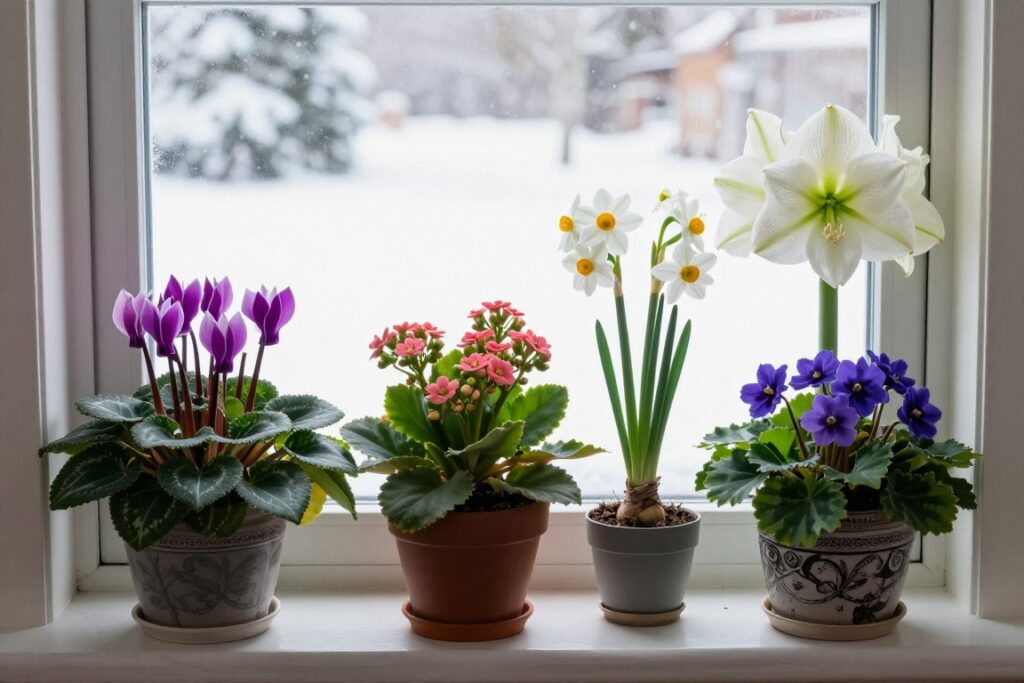
Adding flowering plants to your winter windowsill garden brings color and joy during the darkest months:
- African Violets: Compact plants that bloom repeatedly in low to medium light.
- Miniature Cyclamen: Produces elegant blooms in pink, red, or white for months in cool conditions.
- Kalanchoe: Succulent with clusters of small, bright flowers that last for weeks.
- Paperwhites: Narcissus bulbs that can be forced to bloom indoors in winter without chilling.
- Amaryllis: Dramatic, large blooms on tall stalks; plant bulbs 6-8 weeks before desired flowering.
- Oxalis: Shamrock-like leaves with delicate flowers; adds unique texture to your display.
The Planting Process
Once you’ve selected your location, containers, and plants, it’s time to get your winter windowsill garden growing. Follow these steps for the best results:
Preparing Your Containers
- Clean all containers thoroughly with a mild bleach solution (1 part bleach to 9 parts water) to eliminate any pathogens.
- Ensure containers have drainage holes. If using repurposed containers, create holes in the bottom using a drill or nail.
- Place a layer of small stones or broken pottery pieces at the bottom to improve drainage.
- Position saucers or trays under containers to protect your windowsill from water damage.
Choosing the Right Soil
Use a high-quality potting mix specifically formulated for containers, not garden soil which is too dense for indoor growing. For best results:
- For herbs and vegetables: Use organic potting mix with added compost.
- For microgreens: A seed-starting mix or coco coir works best.
- For flowering plants: Choose a potting mix formulated for indoor flowering plants.

Planting Seeds vs. Transplants
Both seeds and transplants can work well for a winter windowsill garden:
- Seeds: More economical and offer wider variety. Plant at depth indicated on packet (usually 2-3 times the seed diameter).
- Transplants: Provide instant gratification and faster harvests. Gently remove from nursery containers and place in prepared pots at the same depth.
Initial Watering
Water thoroughly after planting until water runs through drainage holes. For seeds, use a spray bottle to avoid displacing them. Allow soil to dry slightly between waterings to prevent root rot.
Care and Maintenance
Proper care is essential for a thriving winter windowsill garden. Follow these guidelines to keep your plants healthy and productive throughout the cold months.
Watering Wisely
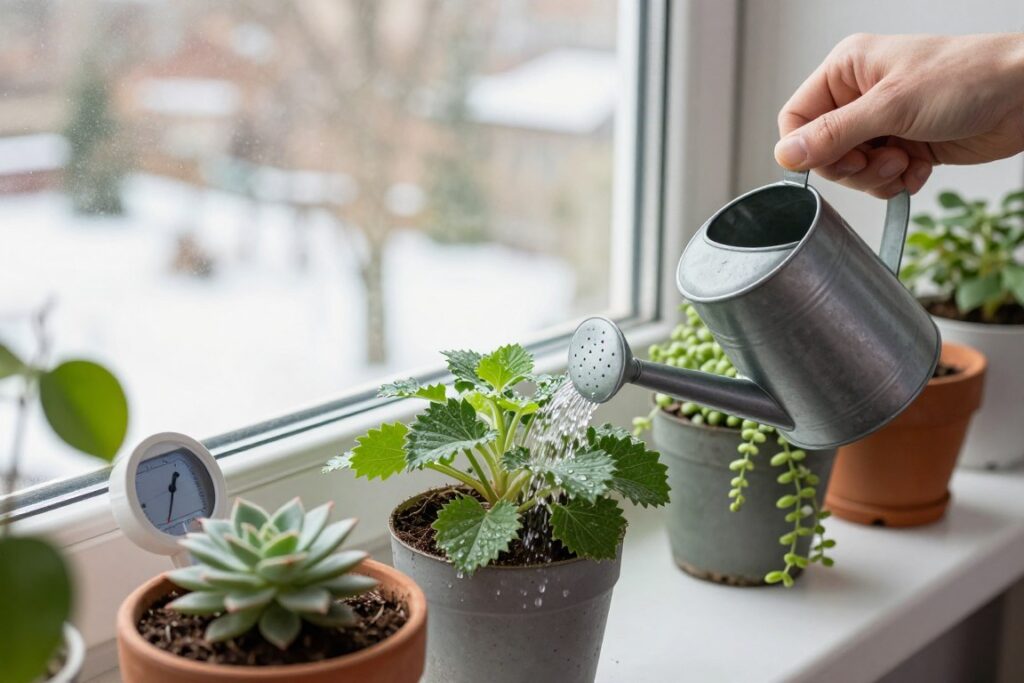
Indoor plants often need less water than you might expect, especially during winter when growth slows:
- Check moisture by inserting your finger 1 inch into the soil—water only when it feels dry at this depth.
- Water at the base of plants to keep foliage dry and prevent disease.
- Use room temperature water to avoid shocking plant roots.
- Water in the morning to allow excess moisture to evaporate during the day.
- Different plants have different needs—succulents require less frequent watering than leafy greens.
Light Management
Winter daylight is limited, so maximizing light exposure is crucial:
- Rotate containers weekly to ensure even growth.
- Clean window glass regularly to maximize light transmission.
- Consider supplemental grow lights if your windows receive less than 4 hours of direct sunlight.
- For flowering plants, respect their photoperiod needs—some require specific light/dark cycles to bloom.
Feeding Your Plants
Container plants deplete nutrients quickly and benefit from regular feeding:
- For edible plants: Use organic liquid fertilizer diluted to half-strength every 2-3 weeks.
- For flowering plants: Apply a balanced, water-soluble fertilizer monthly.
- Reduce feeding frequency during winter months when growth naturally slows.
- Always follow package instructions to avoid over-fertilizing, which can damage plants.
Pruning and Harvesting
Regular harvesting encourages continued production:
- Harvest herbs by cutting stems just above a leaf node to encourage branching.
- For leafy greens, pick outer leaves first, allowing inner leaves to continue growing.
- Harvest microgreens by cutting just above the soil line when they reach 2-3 inches tall.
- Remove spent flowers from ornamental plants to encourage more blooms.
Troubleshooting Common Problems
Even experienced gardeners encounter challenges with indoor growing. Here’s how to identify and address common issues:
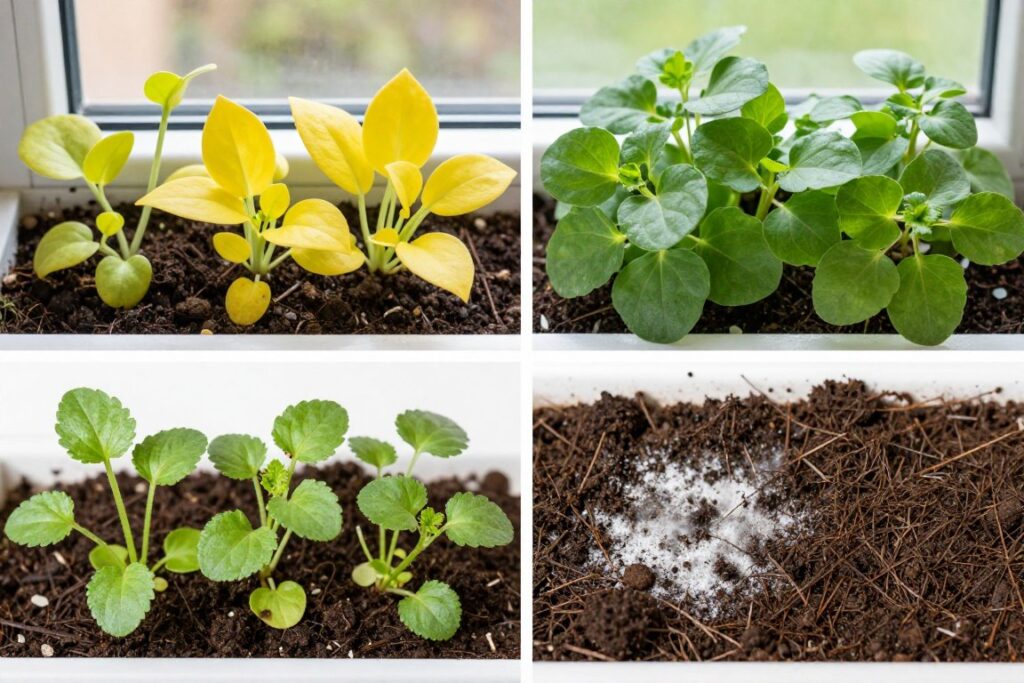
Leggy Plants (Etiolation)
Symptoms: Tall, spindly growth with large gaps between leaves.
Cause: Insufficient light causing plants to stretch toward light sources.
Solution: Move to a brighter window or add supplemental grow lights. Rotate plants regularly to encourage even growth.
Yellowing Leaves
Symptoms: Leaves turning yellow, often starting from the bottom of the plant.
Cause: Usually overwatering, but can also indicate nutrient deficiency or temperature stress.
Solution: Allow soil to dry between waterings. Check drainage and ensure containers aren’t sitting in water. Adjust feeding schedule if needed.
Pests
Common culprits: Aphids, fungus gnats, spider mites.
Solution: Isolate affected plants immediately. For mild infestations, wipe leaves with a soft cloth dipped in soapy water. For persistent problems, use insecticidal soap or neem oil spray.
Mold and Mildew
Symptoms: White, powdery substance on leaves or soil surface.
Cause: Poor air circulation, overwatering, or overcrowding.
Solution: Improve ventilation, reduce watering, and increase space between plants. Remove affected leaves and treat with a fungicide if necessary.
Quick Fix for Drooping Plants
If your plants suddenly droop despite moist soil, they may be experiencing temperature shock. Move them away from cold window glass and ensure they’re not in the path of heating vents or radiators. Most indoor plants prefer temperatures between 65-75°F (18-24°C).
Essential Supplies for Your Winter Windowsill Garden

Premium Organic Potting Mix
A lightweight, well-draining soil blend specifically formulated for container growing. Contains slow-release nutrients and beneficial microbes to promote healthy root development.
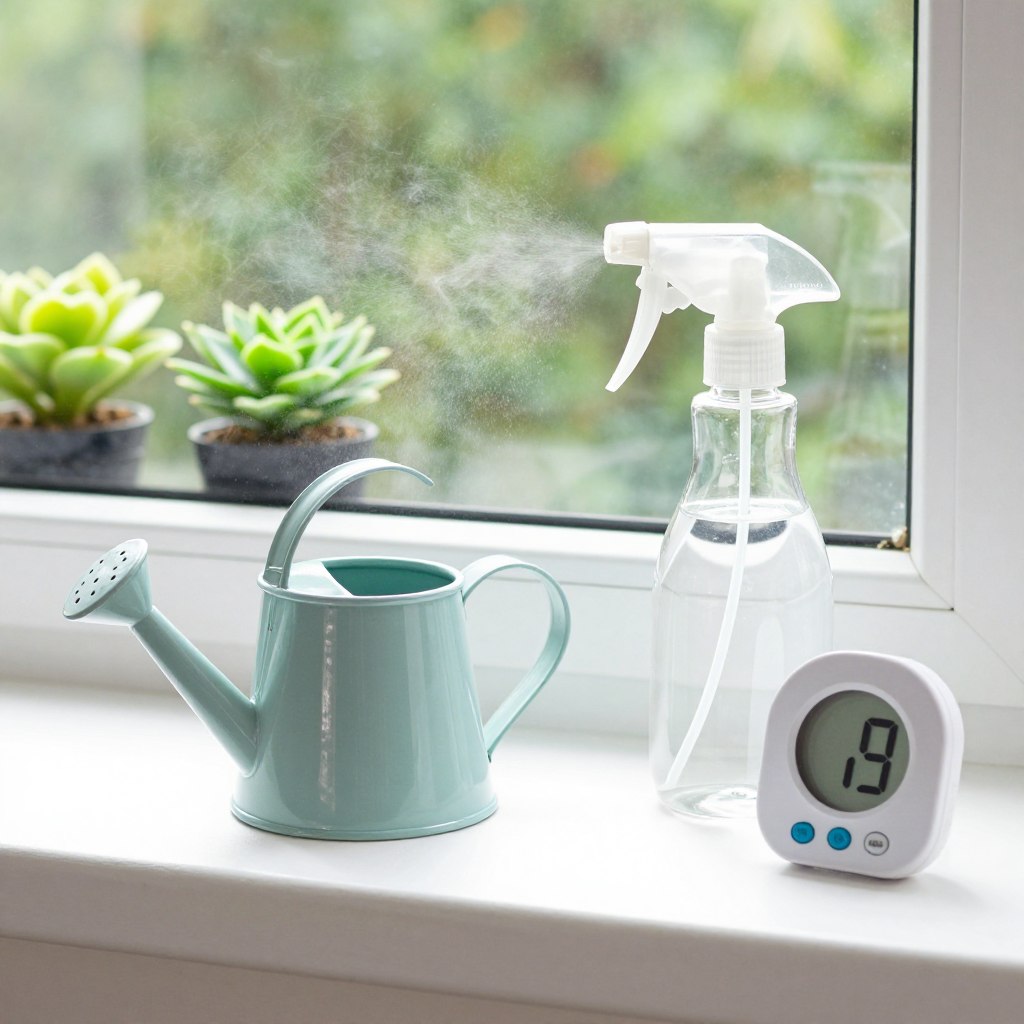
Indoor Watering Kit
Includes a narrow-spout watering can for precise watering, spray bottle for misting, and soil moisture meter to prevent over or under-watering your precious windowsill plants.
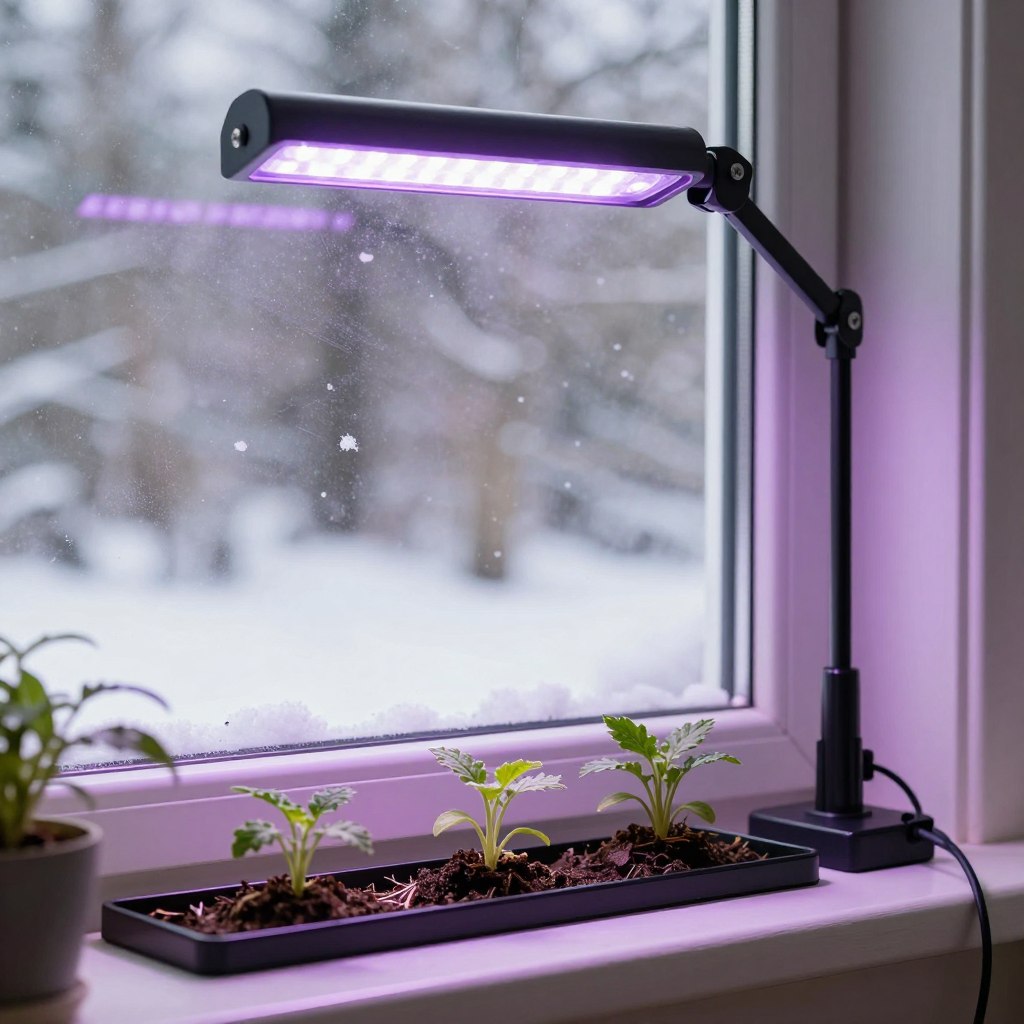
Compact LED Grow Light
Perfect for short winter days, this energy-efficient grow light provides full-spectrum illumination to boost plant growth. Features adjustable height and timer function for optimal light exposure.
Frequently Asked Questions
How often should I water my winter windowsill garden?
Watering frequency depends on several factors including plant type, container size, humidity levels, and temperature. As a general rule, check the soil moisture by inserting your finger about an inch deep—if it feels dry at that depth, it’s time to water. Most windowsill gardens need watering every 3-7 days in winter, but observe your plants closely as individual needs vary.
Can I use garden soil for my windowsill containers?
No, garden soil is too dense for container growing and may contain pests or diseases. Always use a high-quality potting mix specifically formulated for containers. These mixes provide better drainage, aeration, and appropriate nutrients for indoor plants.
My windowsill doesn’t get much direct sunlight. Can I still grow plants?
Yes! Choose plants that tolerate lower light conditions such as parsley, mint, spinach, and certain flowering plants like peace lilies or African violets. You can also supplement with grow lights to provide the necessary light spectrum for plant growth, especially during short winter days.
How long will my windowsill herbs last?
With proper care, many herbs can thrive for months or even years on a windowsill. Perennial herbs like rosemary, thyme, and mint can live for several years when properly maintained. Annual herbs like basil and cilantro typically last 3-6 months before needing replacement. Regular harvesting actually encourages bushier growth and extends the productive life of most herbs.
Start Your Winter Windowsill Garden Today
Creating a winter windowsill garden is a rewarding project that brings life, color, and fresh flavors into your home during the coldest months. Start small with just a few plants that match your available light conditions and gradually expand as you gain confidence and experience.
Remember that gardening is a journey of discovery—some plants will thrive while others might struggle. Learn from each success and challenge, adjusting your approach as you go. The joy of harvesting your own herbs or admiring blooms while snow falls outside makes any initial effort worthwhile.
With the right planning, plant selection, and care, your windowsill can transform into a productive growing space that nourishes both body and spirit throughout winter. Happy growing!