

In our fast-paced world where mental health challenges are increasingly common, finding accessible tools for emotional wellbeing has never been more important. Journaling stands out as a simple yet powerful practice that can transform how we process emotions, manage stress, and navigate life’s complexities. This ancient practice of putting thoughts to paper has been embraced by therapists, mental health professionals, and wellness advocates alike for its proven benefits to psychological health. Whether you’re dealing with anxiety, processing difficult emotions, or simply seeking greater self-awareness, journaling offers a private space for reflection and growth that’s available to anyone with a pen and paper.
Disclosure & Information Note:
This post may contain affiliate links, which means I may earn a small commission if you choose to make a purchase at no additional cost to you. I only recommend products and resources I genuinely believe add value. Portions of this content were created with the assistance of AI tools and then carefully reviewed, edited, and fact-checked by me for accuracy and authenticity. All information is provided for general informational purposes only and is not intended as medical, financial, legal, or professional advice. Always consult a qualified professional before making decisions related to your health, finances, safety, or lifestyle.
The Science Behind Journaling for Mental Health
Journaling isn’t just a feel-good activity—it’s backed by substantial scientific research. When we write about our thoughts and feelings, we engage both hemispheres of the brain. The left hemisphere helps organize and analyze our experiences, while the right hemisphere processes emotions and creativity. This whole-brain engagement creates a powerful therapeutic effect.
Studies show that expressive writing helps us process difficult emotions by giving them structure and meaning. Rather than letting thoughts swirl chaotically in our minds, journaling allows us to externalize them, creating cognitive distance that helps us gain perspective and reduce rumination—that cycle of repetitive negative thinking that can worsen anxiety and depression.
The act of writing activates the analytical and rational prefrontal cortex, helping to regulate the emotional responses from the amygdala. This mirrors techniques used in Cognitive Behavioral Therapy (CBT), where identifying and restructuring thoughts leads to improved emotional states. By writing down our thoughts, we can more easily identify patterns, challenge cognitive distortions, and develop healthier thinking habits.
Research by Dr. James Pennebaker, a pioneer in writing therapy, found that expressive writing for just 15-20 minutes a day over four days was enough to produce measurable physical and psychological benefits. These included improved immune function, reduced blood pressure, better sleep quality, and decreased symptoms of depression and anxiety.
Key Benefits of Journaling for Mental Health

Managing Anxiety and Depression
Regular journaling can significantly reduce symptoms of anxiety and depression. By externalizing worries and fears onto paper, you create mental space and reduce the intensity of these emotions. A 2018 study published in JMIR Mental Health found that positive affect journaling (focusing on positive experiences and emotions) reduced mental distress and improved wellbeing in adults with elevated anxiety symptoms.
For depression, journaling helps break the cycle of negative thinking by encouraging reflection and perspective-taking. It allows you to track mood patterns, identify triggers, and recognize progress over time—all valuable tools in managing depressive symptoms.
Processing Trauma and Difficult Emotions
When we experience trauma or intense emotions, our brains can struggle to process and integrate these experiences. Journaling provides a safe outlet to explore these feelings at your own pace. Research shows that writing about traumatic events can help organize chaotic thoughts and emotions, making them more manageable and less overwhelming.
This process, sometimes called “emotional disclosure,” helps reduce the physiological stress response associated with suppressing difficult emotions. Over time, this can lead to decreased intrusive thoughts and improved psychological wellbeing.
Enhancing Self-Awareness and Mindfulness
Regular journaling cultivates a deeper connection with your inner thoughts and feelings. As you document your experiences, you naturally become more attuned to patterns in your thinking, emotional responses, and behaviors. This heightened self-awareness is a cornerstone of emotional intelligence and personal growth.
Journaling also promotes mindfulness—the practice of being fully present and engaged in the moment. When you sit down to write, you focus your attention on your current thoughts and feelings, creating a natural mindfulness practice that can reduce stress and improve overall mental clarity.
Problem-Solving and Gaining Perspective
Writing about challenges forces us to articulate them clearly, which is often the first step toward finding solutions. The act of putting problems into words can reveal insights that weren’t apparent when the issues were just swirling in your mind.
Journaling also creates a record you can revisit, allowing you to see how you’ve overcome difficulties in the past and gain confidence in your ability to handle current challenges. This historical perspective can be invaluable during difficult times, reminding you of your resilience and growth.
Tracking Progress and Triggers
A consistent journaling practice creates a personal archive that allows you to identify patterns over time. You might notice that your anxiety spikes after certain interactions or that your mood improves following specific activities. These insights can help you make informed decisions about your lifestyle, relationships, and self-care practices.
For those managing mental health conditions, this tracking function can complement professional treatment by providing detailed information about symptoms, triggers, and the effectiveness of various coping strategies.
How to Start Journaling for Mental Health: A Practical Guide

Overcoming the Blank Page
Many people feel intimidated when facing an empty journal. Remember that your journal is for you alone—there’s no right or wrong way to do it. You don’t need to be a “good writer” or create perfectly crafted prose. The goal is expression, not perfection.
If you’re feeling stuck, start with something simple: “Today I feel…” or “Right now I’m thinking about…” Sometimes just writing about your reluctance to journal can break the ice and lead to deeper reflections.
Methods and Styles of Journaling
There are numerous approaches to journaling, and you can experiment to find what works best for you:
Free Writing
Write continuously for a set period (5-15 minutes) without stopping, editing, or censoring yourself. This stream-of-consciousness approach can reveal thoughts and feelings you weren’t fully aware of.
Gratitude Journaling
Focus on recording things you’re thankful for each day. This practice has been shown to increase positive emotions, reduce depression, and improve overall wellbeing by shifting attention toward positive aspects of life.
Bullet Journaling
Combine to-do lists, calendars, and reflections in a structured format. This method can help organize thoughts and track habits while providing space for creative expression and emotional processing.
Prompt-Based Journaling
Use specific questions or prompts to guide your writing. This approach can be helpful when you’re not sure what to write about or want to explore particular aspects of your experience.
Art Journaling
Combine writing with drawing, painting, or collage to express emotions that might be difficult to put into words. Visual expression can access different parts of the brain and provide additional pathways for emotional processing.
Structured Reflection
Use a consistent format to review your day or week, perhaps noting challenges, victories, emotions, and lessons learned. This creates a helpful routine and makes it easier to track patterns over time.
Logistics: Setting Yourself Up for Success
Consider these practical aspects to make journaling a sustainable practice:
Choose Your Medium
Decide whether you prefer writing in a physical notebook or using a digital platform. Physical journals offer a tactile experience and freedom from digital distractions, while digital journals provide convenience, searchability, and privacy features. Some people use journaling apps that offer prompts and reminders, while others prefer the simplicity of a plain notebook.
Establish a Routine
Consistency helps make journaling a habit. Consider whether you focus better in the morning, during lunch breaks, or before bed. Even five minutes of regular journaling is more beneficial than occasional hour-long sessions. Link your practice to an existing habit—like your morning coffee or evening wind-down—to help it stick.
Create a Comfortable Space
Designate a quiet, private area for journaling where you feel safe expressing yourself freely. This might be a cozy corner of your home, a local café, or even your car during a lunch break. Having a dedicated space can help signal to your brain that it’s time to reflect.
Set Realistic Expectations
Start small with achievable goals, like writing for five minutes three times a week. You can always increase your commitment as journaling becomes part of your routine. Remember that consistency matters more than length—brief, regular entries are more beneficial than occasional marathon sessions.
Journaling Prompts and Techniques for Mental Health
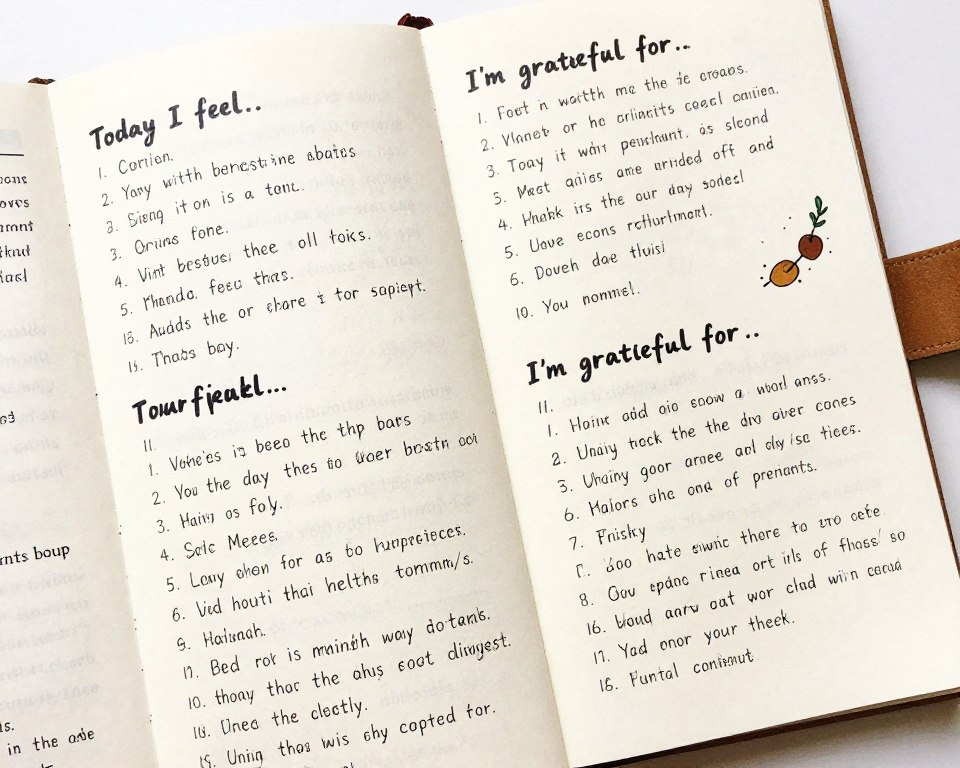
Prompts can provide direction when you’re unsure what to write about. They can also help you explore specific aspects of your mental health. Here are some effective prompts to get you started:
- Emotional awareness: “What am I feeling right now? Where do I feel it in my body? What triggered this emotion?”
- Stress reduction: “What’s currently taking up mental space for me? Which of these things can I control, and which can I release?”
- Gratitude practice: “What are three things I’m grateful for today, and why do they matter to me?”
- Self-compassion: “If a friend were in my situation, what advice or comfort would I offer them? How can I extend that same kindness to myself?”
- Challenge exploration: “What’s one challenge I faced today? How did I handle it? What did I learn?”
- Future vision: “How would I like to feel one month from now? What small steps can I take toward that feeling?”
- Limiting beliefs: “What negative thought patterns do I notice recurring in my mind? What evidence contradicts these beliefs?”
Effective Journaling Techniques

Unsent Letters
Write letters you don’t intend to send to process feelings about relationships or situations. This technique provides a safe outlet for expressing emotions that might be difficult to communicate directly. It can be particularly helpful for working through grief, anger, or unresolved feelings.
Thought Challenging
Identify negative or unhelpful thoughts, then write evidence for and against them. This CBT-inspired technique helps you evaluate the accuracy of your thoughts and develop more balanced perspectives. For example, if you think “I’m terrible at my job,” list evidence that supports and contradicts this belief.
Worry Time
Designate a specific time to write down all your worries. This technique helps contain anxiety by giving concerns a dedicated space, rather than allowing them to intrude throughout your day. When worries arise outside this time, note them briefly and save them for your next “worry time” session.
Positive Experience Elaboration
Describe positive experiences in detail, noting what you saw, heard, felt, and thought. This technique helps counteract the brain’s negativity bias by strengthening neural pathways associated with positive emotions. The more vividly you recreate the experience in writing, the more you reinforce its positive impact.
Values Reflection
Regularly write about your core values and how your daily actions align with them. This technique helps increase meaning and purpose, which are protective factors for mental health. When you notice a misalignment between values and actions, you can make adjustments to reduce internal conflict.
Making Journaling a Sustainable Habit

Consistency is key to experiencing the full benefits of journaling. Here are strategies to help make journaling a lasting part of your mental health routine:
Start Small and Build Gradually
Begin with just 2-5 minutes of journaling. As the habit forms, you can gradually extend your sessions. Many people find that once they start writing, they naturally want to continue beyond their initial time commitment. The goal is to make journaling feel manageable rather than overwhelming.
Connect to Your Why
Remind yourself regularly of your personal reasons for journaling. Whether it’s reducing anxiety, processing grief, or increasing self-awareness, connecting with your motivation makes it easier to prioritize the practice when life gets busy.
Remove Friction
Make journaling as convenient as possible. Keep your journal visible and accessible. If you use a physical journal, consider keeping it with a pen on your nightstand or desk. If you prefer digital journaling, place the app on your home screen or set up shortcuts.
Use Habit Stacking
Attach journaling to an existing habit in your routine. For example, journal right after your morning coffee, during your lunch break, or as part of your bedtime routine. This technique, known as habit stacking, leverages existing neural pathways to establish new habits more easily.
Embrace Imperfection
Some days your journaling might feel profound and insightful; other days it might seem mundane or scattered. Both are valuable. Release perfectionism and recognize that the simple act of showing up consistently is what creates the mental health benefits.
Create Accountability
Consider sharing your journaling commitment with a friend, joining a journaling group, or working with a therapist who can incorporate your journal entries into your sessions. External accountability can help maintain motivation, especially in the early stages of habit formation.
Celebrate Milestones
Acknowledge your consistency with small rewards. Perhaps after a week of daily journaling, treat yourself to a special coffee or an hour doing something you enjoy. Celebrating milestones reinforces the habit and makes the process more enjoyable.
Overcoming Common Journaling Challenges
“I Don’t Have Time”
Time constraints are a common barrier, but remember that effective journaling doesn’t require lengthy sessions. Even 2-3 minutes of focused writing can provide benefits. Consider where you might find small pockets of time—perhaps while waiting for your coffee to brew or during a commute. You might also try voice-recording your thoughts if writing isn’t feasible.
“I Don’t Know What to Write”
If you’re facing writer’s block, structured prompts can be invaluable. Keep a list of go-to questions or use a prompt journal. Alternatively, simply describe your current environment or physical sensations as a way to ease into deeper reflection. Remember that writing about “having nothing to write about” is itself a valid journal entry that often leads to unexpected insights.
“I Keep Forgetting to Journal”
Visual reminders and calendar alerts can help establish the habit. Place your journal somewhere visible in your daily environment, or set a recurring reminder on your phone. Habit tracking apps can also provide motivation through visual progress indicators and streaks.
“It Brings Up Difficult Emotions”
Sometimes journaling can surface challenging feelings, especially when processing trauma or difficult experiences. If this happens, consider setting boundaries around your practice—perhaps limiting time spent on difficult topics or balancing them with gratitude or strength-focused prompts. Remember that it’s okay to take breaks or seek support from a mental health professional when needed.
“Journaling isn’t about perfect prose or profound insights every time. It’s about showing up consistently to meet yourself on the page, exactly as you are in that moment.”
Integrating Journaling with Other Mental Health Practices

While journaling is powerful on its own, it can be even more effective when combined with other mental health practices:
Journaling and Therapy
Many therapists encourage journaling between sessions to extend the therapeutic work. Your journal entries can provide valuable material to discuss in therapy, helping identify patterns and track progress. Some therapeutic approaches, like Cognitive Behavioral Therapy (CBT) and Dialectical Behavior Therapy (DBT), include specific journaling exercises to reinforce skills and insights.
Journaling and Meditation
These practices complement each other beautifully. Meditation increases present-moment awareness and emotional regulation, which can enhance the quality of your journaling. Conversely, journaling can help process insights that arise during meditation. Consider journaling immediately after meditation to capture these reflections.
Journaling and Physical Exercise
Exercise reduces stress hormones and increases endorphins, creating an ideal mental state for reflective writing. Many people find that journaling after physical activity leads to clearer thinking and more creative insights. You might also use your journal to track how different types of movement affect your mood and mental clarity.
Journaling and Sleep Hygiene
Evening journaling can be part of a healthy sleep routine, helping to clear your mind before bed. Writing about worries or creating a to-do list for tomorrow can prevent rumination that interferes with sleep. However, if journaling about difficult topics is activating for you, schedule these sessions earlier in the day.
Conclusion: Your Journaling Journey

Journaling for mental health is a deeply personal journey that evolves with you over time. What begins as a simple practice of putting thoughts on paper can develop into a powerful tool for self-discovery, emotional processing, and psychological growth. The beauty of journaling lies in its accessibility and flexibility—it requires minimal resources but offers profound benefits.
As you begin or continue your journaling practice, remember that consistency matters more than perfection. Start where you are, with whatever time and resources you have available. Be patient and compassionate with yourself through the process. Some days will flow easily; others might feel more challenging. Both experiences are valuable parts of the journey.
Your journal is a private space for exploration and expression—free from judgment or expectations. It’s not a performance or a product to be evaluated, but rather a process to be experienced. Through regular journaling, you create not only a record of your thoughts and feelings but also a tangible demonstration of your commitment to your mental wellbeing.
Whether you’re managing anxiety, processing grief, seeking greater self-awareness, or simply creating space for reflection in a busy life, journaling offers a reliable path forward. With each entry, you strengthen your relationship with yourself and develop greater capacity for navigating life’s challenges with clarity and resilience.