

Ever feel like your brain is running on fumes after a long day of emails, meetings, and endless scrolling? You’re not alone. In our hyper-connected world, many of us are searching for effective “brain hacks” to stay sharp and focused. But what if the best brain booster isn’t a supplement or app, but something much more enjoyable?
Welcome to the world of “neurobics” – brain aerobics through creative hobbies. Science shows that engaging in creative activities doesn’t just make life more colorful; it builds cognitive reserve, enhances neuroplasticity, and improves overall mental wellbeing. The best part? These brain-boosting benefits come wrapped in activities that are genuinely fun and fulfilling.
In this article, we’ll explore creative hobbies that are scientifically proven to support brain health, with simple ways to get started – even if you don’t consider yourself “creative” or are short on time. Ready to give your brain a delightful workout? Let’s dive in!
Creative hobbies engage multiple brain regions, supporting cognitive health while bringing joy.
Disclosure & Information Note:
This post may contain affiliate links, which means I may earn a small commission if you choose to make a purchase at no additional cost to you. I only recommend products and resources I genuinely believe add value. Portions of this content were created with the assistance of AI tools and then carefully reviewed, edited, and fact-checked by me for accuracy and authenticity. All information is provided for general informational purposes only and is not intended as medical, financial, legal, or professional advice. Always consult a qualified professional before making decisions related to your health, finances, safety, or lifestyle.
Playing a Musical Instrument: A Symphony for Your Brain
Have you ever watched a musician and marveled at how their fingers seem to dance effortlessly across their instrument? What you’re witnessing isn’t just artistic talent – it’s a full-brain workout in action.

Why It Works
When you play an instrument, your brain lights up like a holiday display. Your visual system processes the notes, your motor cortex controls precise finger movements, your auditory system monitors the sounds, and your frontal lobe makes split-second decisions. It’s like cross-training for your brain!
Research published in the Journal of Neuroscience shows that musicians have enhanced connectivity between brain hemispheres and greater gray matter volume in regions responsible for motor control, auditory processing, and memory. Even better? These benefits appear even when you start learning as an adult.
Brain-Boost Breakdown:
- Strengthens memory and recall
- Enhances executive function
- Improves hand-eye coordination
- Boosts auditory processing
- Reduces stress through emotional expression
How to Start
Don’t worry about becoming the next Mozart. The cognitive benefits come from the learning process itself, not performance mastery.
- No-cost option: Download a free piano app like Perfect Piano or Simply Piano and spend 10 minutes daily learning basic notes.
- Low-cost option: Pick up a used ukulele (often under $30) – it’s one of the easiest instruments to learn basic songs on quickly.
Ready to Make Some Music?
Start with just 5 minutes of practice today. Remember, it’s about the journey, not perfection!
Sketching and Doodling: Drawing Your Way to Better Brain Health
Think you can’t draw? That’s exactly why sketching might be the perfect brain-boosting hobby for you. The cognitive benefits come from the process of observing and creating – not from producing gallery-worthy art.

Why It Works
Drawing engages your visual-spatial abilities, fine motor skills, and concentration in a powerful combination. When you sketch from observation, you’re training your brain to truly see details that your automatic processing usually filters out.
A 2017 study in The Arts in Psychotherapy found that just 20 minutes of free-form drawing significantly reduced cortisol levels (a stress hormone). Meanwhile, research from the University of Waterloo shows that doodling while listening can actually improve memory retention by up to 29%!
Brain-Boost Breakdown:
- Enhances visual-spatial processing
- Improves attention to detail
- Reduces stress and anxiety
- Strengthens hand-eye coordination
- Promotes mindfulness and present-moment awareness
How to Start
The beauty of drawing as a brain-boosting hobby is that you can begin with literally nothing more than a pen and the back of an envelope.
- No-cost option: Grab any paper and pen. Set a timer for 5 minutes and draw an everyday object without looking at your paper (called “blind contour drawing”).
- Low-cost option: Pick up a small sketchbook and pencil set (under $15) and commit to filling one page daily with anything – scribbles, patterns, or simple objects.
Pencils Ready?
You don’t need to create a masterpiece – just start making marks on paper!
Gardening: Grow Your Plants and Your Brain
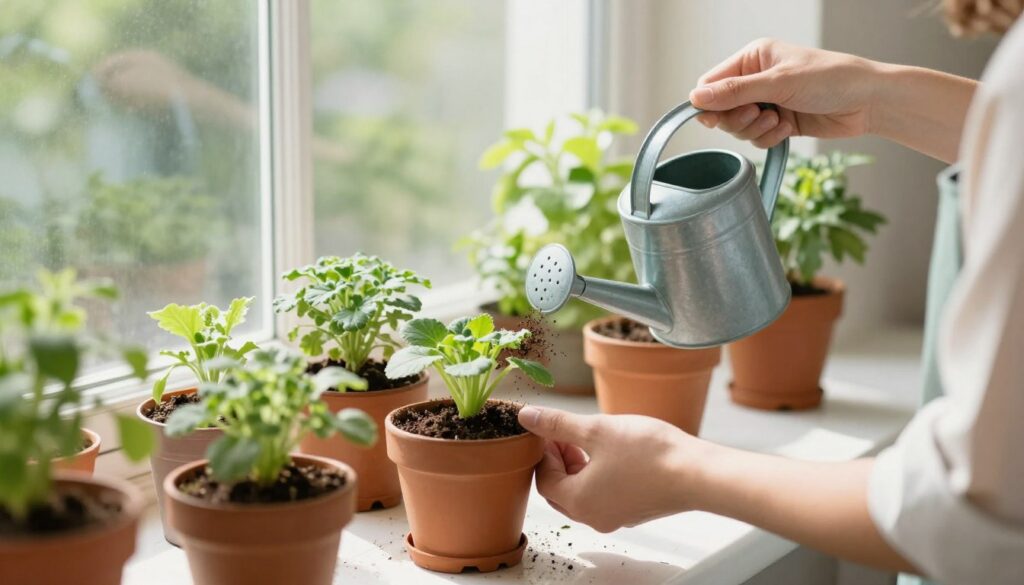
There’s something deeply satisfying about nurturing a living thing from seed to bloom. Gardening connects us to nature’s rhythms while providing a surprising cognitive workout.
Why It Works
Gardening engages your brain on multiple levels: planning garden layouts exercises executive function, learning about plant needs builds knowledge networks, and the physical activity increases blood flow to the brain. Plus, contact with soil bacteria may actually boost serotonin levels – nature’s antidepressant!
A fascinating study in the Journal of Alzheimer’s Disease followed 2,800 people over 16 years and found that gardening regularly reduced the risk of dementia by 36%. Another study from the University of Florida showed improved attention and memory after just one 30-minute gardening session.
Brain-Boost Breakdown:
- Enhances planning and problem-solving skills
- Improves attention and concentration
- Reduces stress and anxiety
- Combines physical activity with mental engagement
- Builds sensory awareness through touch, smell, and sight
How to Start
You don’t need a yard or green thumb to reap the brain benefits of gardening. Start small and simple:
- No-cost option: Regrow green onions or lettuce from kitchen scraps in a small glass of water on your windowsill.
- Low-cost option: Buy a $5 basil plant from the grocery store and keep it alive for a month, learning about its water and light needs.
Ready to Get Your Hands Dirty?
Start with just one plant and see how it grows – along with your brain!
Writing: Putting Thoughts on Paper, Power in Your Brain
Whether it’s journaling about your day or crafting fictional worlds, writing is a powerful tool for organizing thoughts, processing emotions, and keeping your mind sharp.

Why It Works
Writing engages multiple cognitive processes simultaneously. You must retrieve memories, organize thoughts logically, make word choices, and maintain focus – all excellent exercise for your neural networks. Interestingly, studies show that handwriting activates more regions of the brain than typing, creating stronger memory traces.
Research in the Journal of the American Medical Association found that expressive writing (about emotions and experiences) for just 20 minutes, three days in a row, led to improved mood and reduced stress levels. For older adults, a study in Neuropsychology showed that regular writing helped maintain cognitive function better than reading alone.
Brain-Boost Breakdown:
- Strengthens memory retrieval and organization
- Enhances vocabulary and language skills
- Improves emotional processing
- Boosts creative thinking and problem-solving
- Promotes mindfulness and stress reduction
How to Start
The beauty of writing is that you need minimal equipment to begin:
- No-cost option: Set a timer for 5 minutes and write continuously about anything that comes to mind – no editing, no judgment.
- Low-cost option: Purchase a simple notebook ($3-5) dedicated to daily writing. Start with three sentences about your day, gradually increasing as it becomes a habit.
Words Waiting to Flow?
Don’t worry about writing the next great novel – just start putting pen to paper!
Learning a New Language: Multilingual Brain Benefits
¿Hablas español? Parlez-vous français? Learning a new language isn’t just useful for travel – it’s one of the most comprehensive workouts your brain can get.
Why It Works
Language learning engages virtually every major area of your brain. You’re processing new sounds (auditory cortex), learning grammar rules (frontal lobe), memorizing vocabulary (hippocampus), and practicing pronunciation (motor cortex). It’s like a full-service gym membership for your brain!
The cognitive benefits are remarkable. A study in Neurology found that bilingualism delayed the onset of dementia symptoms by an average of 4.5 years – more effective than any medication currently available. Even more encouraging, a study in the journal Aging showed measurable improvements in attention and cognitive flexibility after just one week of intensive language study.
Brain-Boost Breakdown:
- Enhances memory and recall
- Improves decision-making and multitasking
- Strengthens attention and focus
- Boosts auditory processing
- Delays age-related cognitive decline
How to Start
Language learning has never been more accessible, with numerous free or low-cost options:
- No-cost option: Download Duolingo (free) and commit to just 5 minutes daily – consistency matters more than duration.
- Low-cost option: Find a language exchange partner through free apps like Tandem or HelloTalk to practice basic conversations once a week.
Ready to Expand Your Linguistic Horizons?
Start with just a few words or phrases today – your brain will thank you!
Creative Cooking: A Recipe for Brain Health
Cooking without a recipe might sound intimidating, but it’s actually a delicious way to exercise your brain’s creative and problem-solving abilities.

Why It Works
Improvisational cooking engages multiple cognitive skills simultaneously. You’re making predictions (what flavors will work together), solving problems in real-time (adjusting seasoning), using sensory integration (taste, smell, sight), and exercising memory (recalling what worked before). Plus, the multisensory nature of cooking creates stronger neural connections than activities that engage fewer senses.
Research from the University of Edinburgh found that people who regularly engaged in complex cooking showed better memory and executive function as they aged. The combination of creativity, sensory stimulation, and the satisfaction of creating something tangible makes cooking particularly beneficial for brain health.
Brain-Boost Breakdown:
- Enhances executive function and planning
- Improves sensory integration
- Boosts creativity and problem-solving
- Strengthens working memory
- Reduces stress through mindful focus
How to Start
You don’t need to be a chef to reap the cognitive benefits of creative cooking:
- No-cost option: Challenge yourself to create a meal using only what’s already in your pantry, without following a recipe.
- Low-cost option: Buy one new spice or ingredient you’ve never used before and experiment with adding it to familiar dishes.
Kitchen Creativity Calling?
Start with simple experiments – no culinary school required!
Frequently Asked Questions About Creative Hobbies for Brain Health

I’m not a “creative person.” Can I still benefit?
Absolutely! The idea that creativity is an innate talent rather than a learnable skill is one of the most persistent myths in our culture. Creativity is more like a muscle than a genetic gift – it strengthens with use and atrophies with neglect.
The brain benefits come from the process of creating, not the quality of what you produce. Focus on exploration and enjoyment rather than the end result. Remember that even professional artists and musicians spend years developing their skills – they weren’t born with a paintbrush or guitar in hand!
Start by reframing these activities as “skill-building” rather than “being creative.” This mental shift can remove the pressure to produce something impressive and allow you to enjoy the cognitive benefits of the process itself.
I’m so busy. How can I fit this in?
Think “micro-hobbies” rather than major time commitments. Research shows that even brief creative sessions provide cognitive benefits:
- 5 minutes of sketching while on a phone call
- 10 minutes of language practice during your commute
- 15 minutes of improvised cooking instead of following a recipe
Consistency matters more than duration. Five minutes daily will yield more brain benefits than a three-hour session once a month. Try attaching your creative practice to an existing habit (what behavioral scientists call “habit stacking”) – for example, sketching while drinking your morning coffee or practicing an instrument right after brushing your teeth.
I’m not good at art or music. What else is there?
The world of creative hobbies extends far beyond traditional arts! Consider these brain-boosting alternatives:
- Storytelling: Creating oral stories for children or friends
- Photography: Composing interesting shots with just your phone camera
- Flower arranging: Creating simple displays from grocery store bouquets
- Puzzle creation: Designing word searches or crosswords
- Home redesign: Rearranging furniture or creating color schemes
Remember that “creative” simply means making something new or approaching something in a novel way. Even strategic games like chess involve tremendous creativity in problem-solving and pattern recognition.
How long until I see brain benefits?
You’ll likely experience immediate benefits in the form of a “flow state” – that satisfying feeling of being completely absorbed in an activity – which reduces stress hormones and increases feel-good neurotransmitters like dopamine.
For measurable cognitive improvements, consistency matters more than intensity. Research suggests that:
- Stress reduction benefits can appear after a single session
- Improvements in focus and attention may be noticeable within 1-2 weeks of regular practice
- Enhanced memory and problem-solving skills typically emerge after 4-6 weeks
- Structural brain changes that protect against cognitive decline develop over months and years of consistent engagement
Think of creative hobbies as long-term investments in your brain health – the cognitive equivalent of a retirement account that grows more valuable over time.
Your Creative Brain Health Starter Kit
For the Total Beginner
These high-quality, free tutorials are specifically designed for absolute beginners with no prior experience:
- Draw A Box – Structured drawing fundamentals that focus on building skills, not talent
- Justin Guitar Beginner Course – Widely considered the best free guitar instruction online
- Duolingo – Gamified language learning that makes starting fun and accessible
- No-Equipment Gardening – How to start growing plants with just kitchen scraps
For the Curious Mind
Want to understand the science behind how creative activities transform your brain? These accessible resources explain the fascinating neuroscience:
- Book: The Brain That Changes Itself by Norman Doidge – Engaging stories about neuroplasticity
- Podcast: Huberman Lab – Neuroscientist Andrew Huberman explains brain function in accessible terms
- Video: How Art Changes Your Brain – TED-Ed’s beautiful explanation of creativity’s impact
For the Community Seeker
Creative pursuits are even more beneficial when shared. These welcoming communities are perfect for beginners:
- Sketch & Sip – Casual drawing meetups (search your local area on Meetup)
- r/ArtFundamentals – Supportive Reddit community for beginning artists
- iTalki – Connect with language exchange partners worldwide
- Community Garden Finder – Locate shared gardens in your area
Affordable Starter Kits
You don’t need expensive equipment to begin. These budget-friendly options provide everything you need:
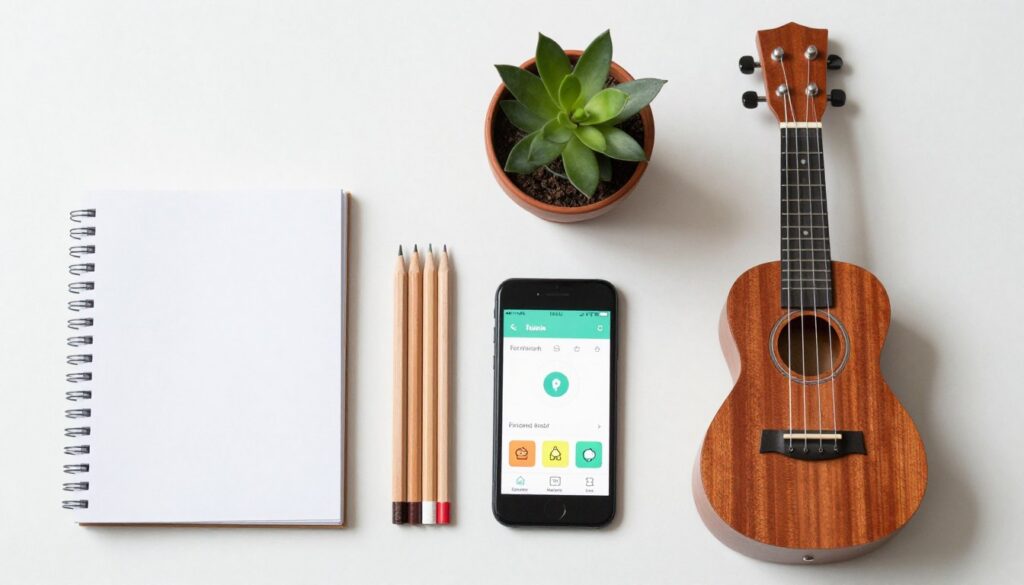
- Drawing: Basic Sketch Set – Quality pencils and paper under $15
- Music: Beginner Ukulele Kit – One of the easiest instruments to learn, around $40
- Gardening: Herb Starter Kit – Complete windowsill herb garden under $30
- Writing: Pocket Notebook – Carry it everywhere for ideas and observations
Your Brain’s Creative Journey Starts Now
We’ve explored how creative hobbies for brain health offer a powerful combination of cognitive benefits and genuine enjoyment. Whether you’re drawn to the structured patterns of music, the visual exploration of drawing, the nurturing process of gardening, the expressive potential of writing, the linguistic challenge of a new language, or the sensory delight of cooking – your brain is ready to grow and thrive through creative engagement.
Remember that this isn’t about achieving mastery or creating masterpieces. It’s about giving your brain new and interesting challenges, building cognitive reserve, and finding moments of flow and joy in your daily life. The most important step is simply to begin.
Try One Small Thing This Week
Choose just one tiny, 5-minute creative action from this article to try in the next few days. Notice how it feels, both during the activity and afterward. Your brain will thank you for this small but significant gift.
We’d love to hear which creative hobby you’re planning to try! Share your experience or choice in the comments below. Your journey might inspire someone else to take that first small step toward better brain health through creativity.